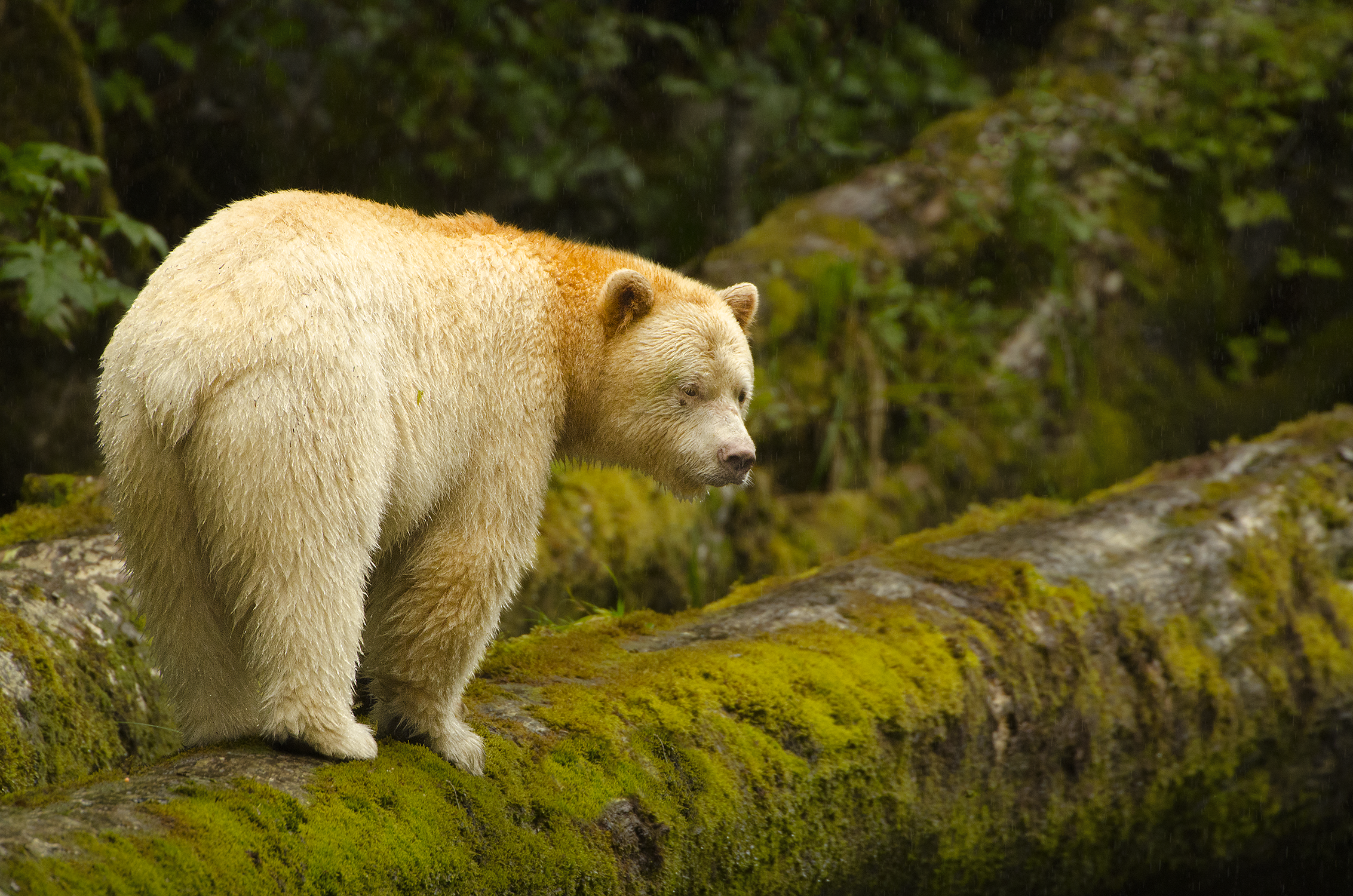
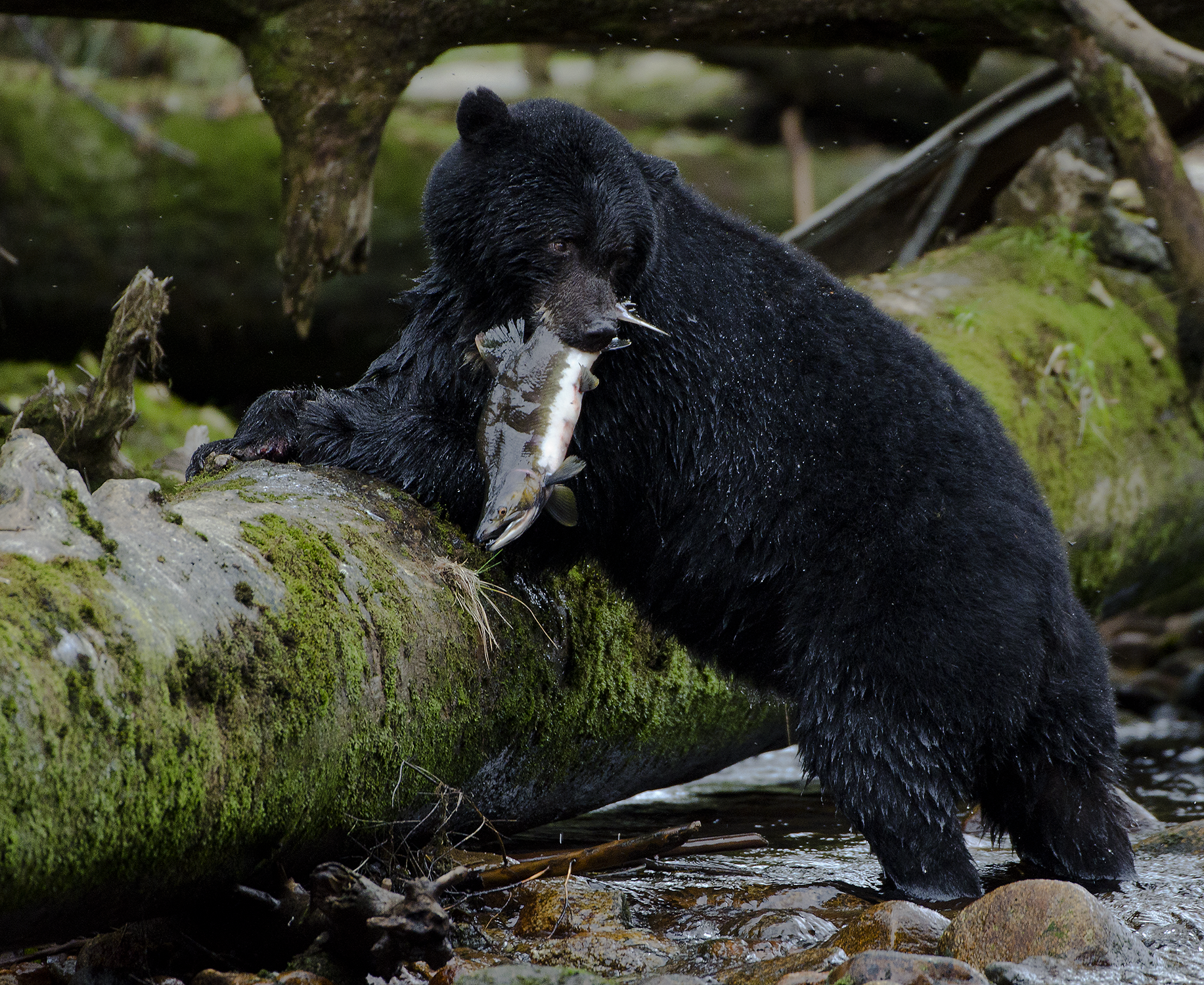
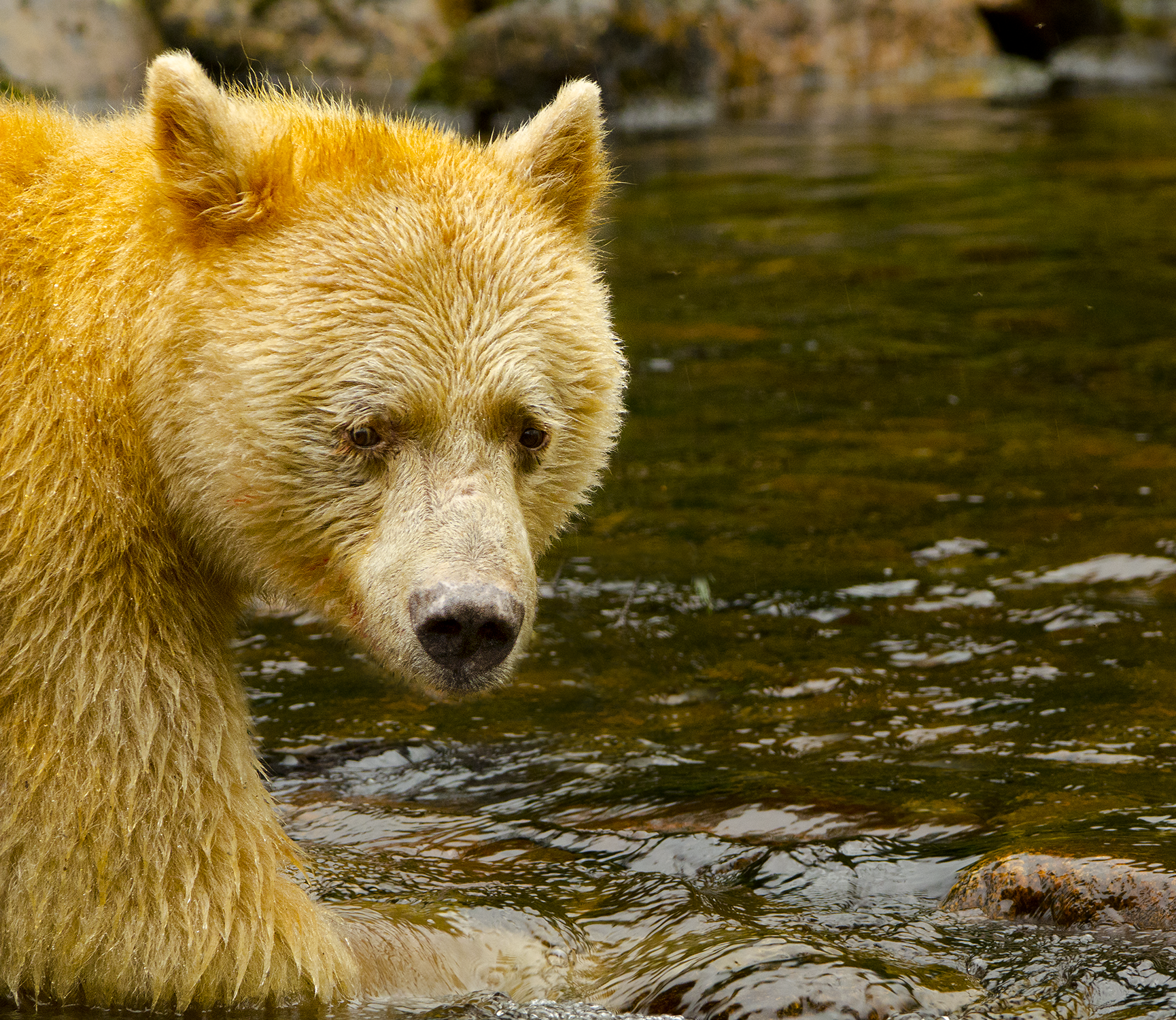
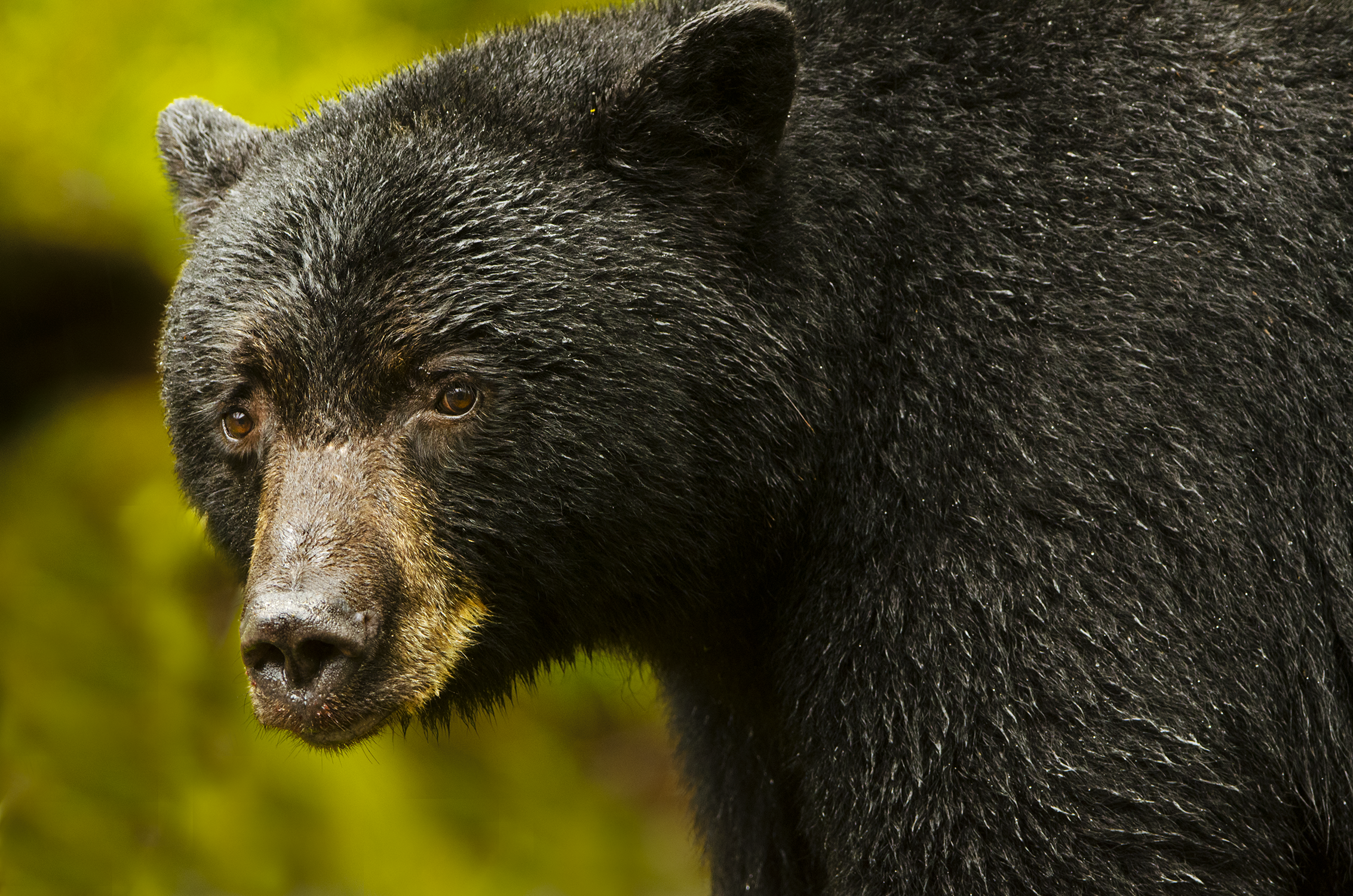
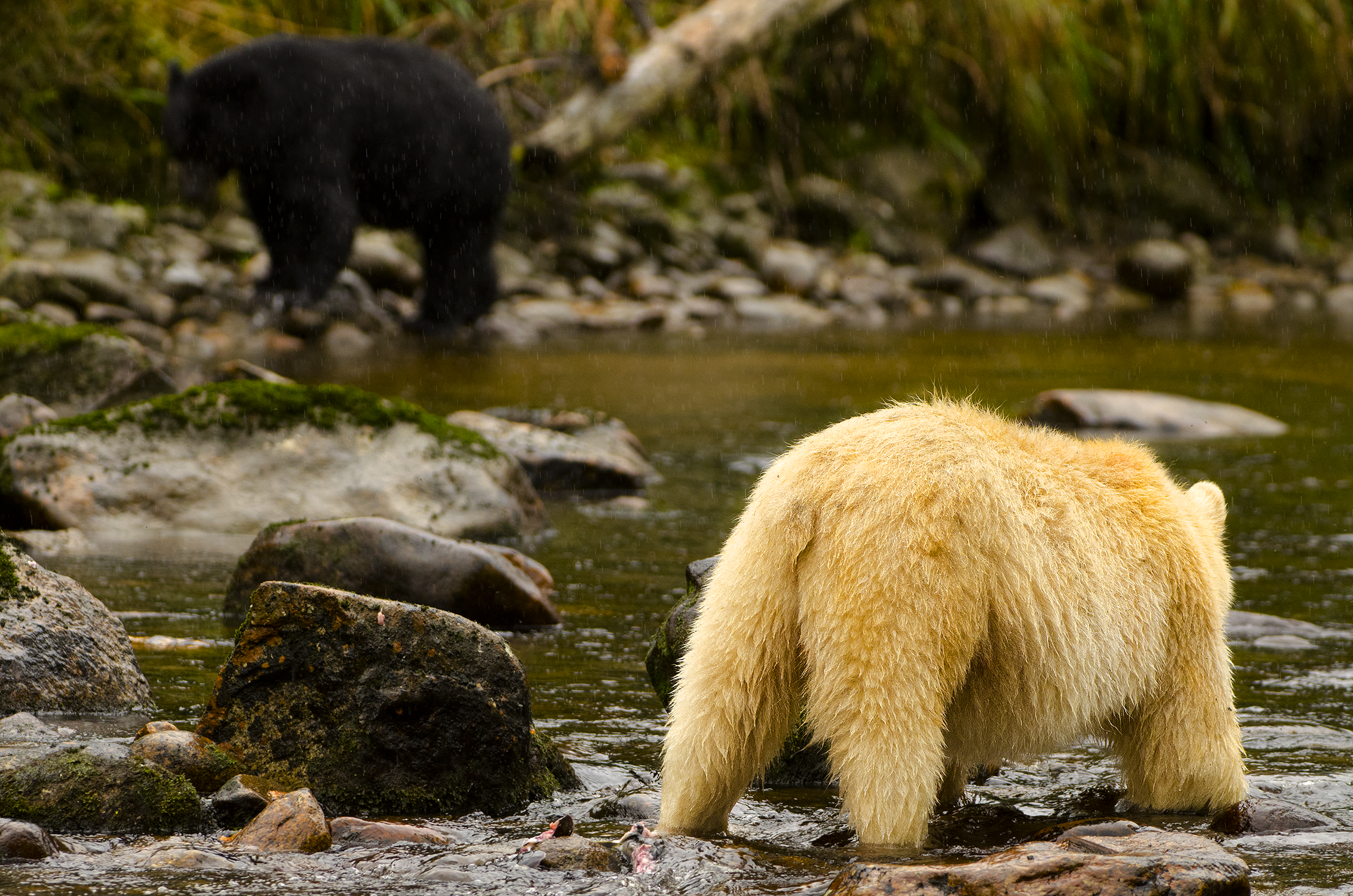
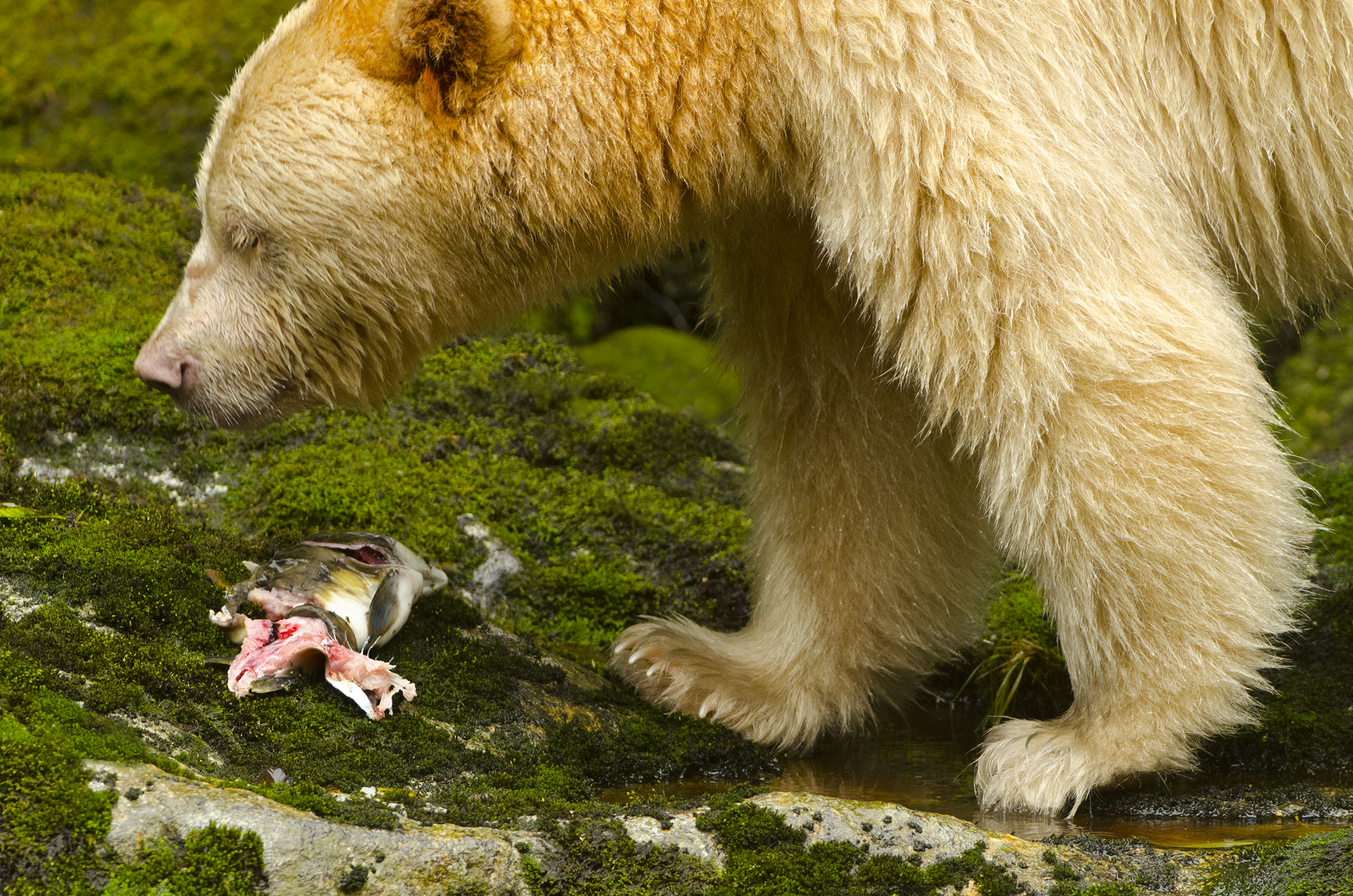
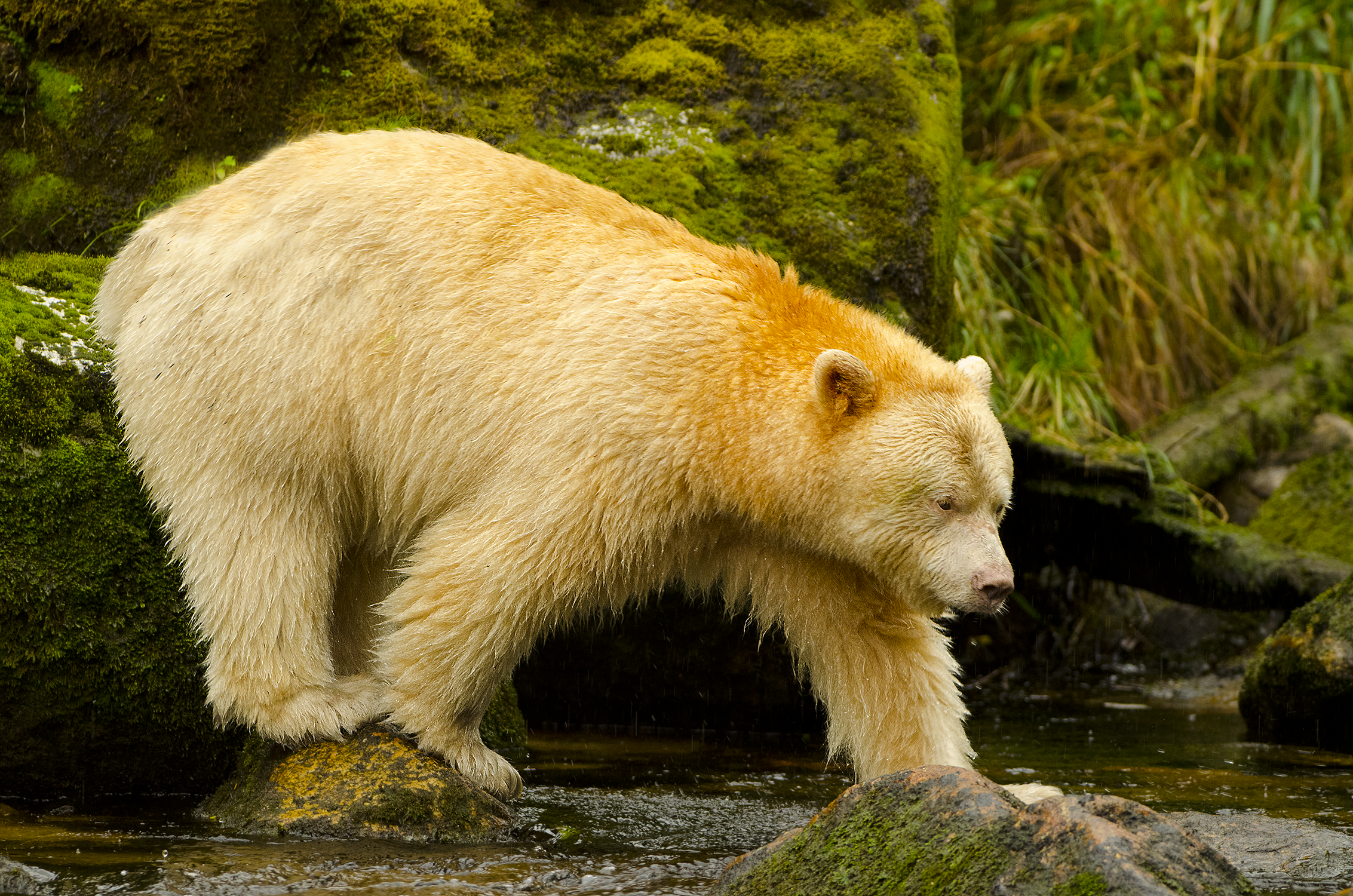
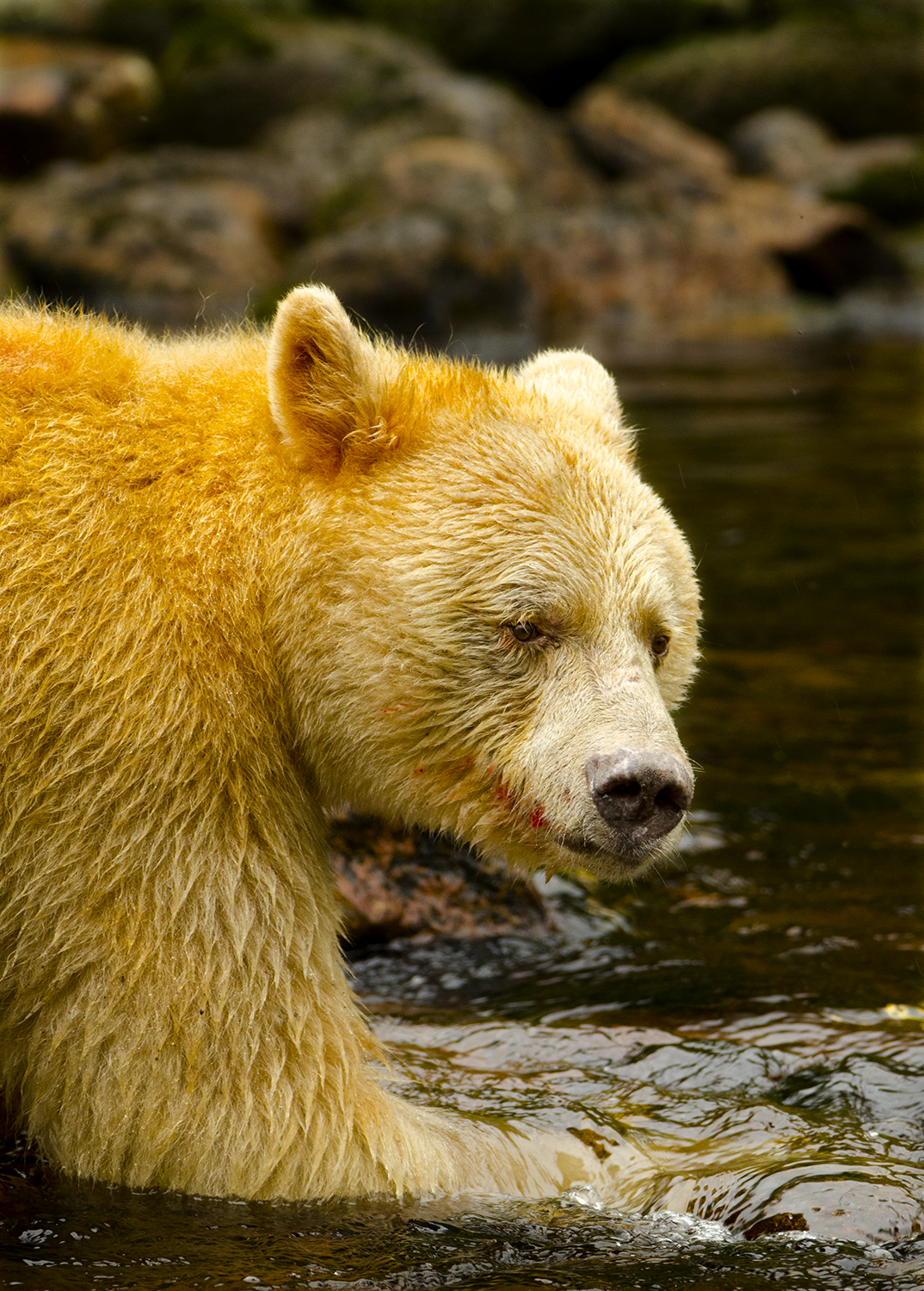
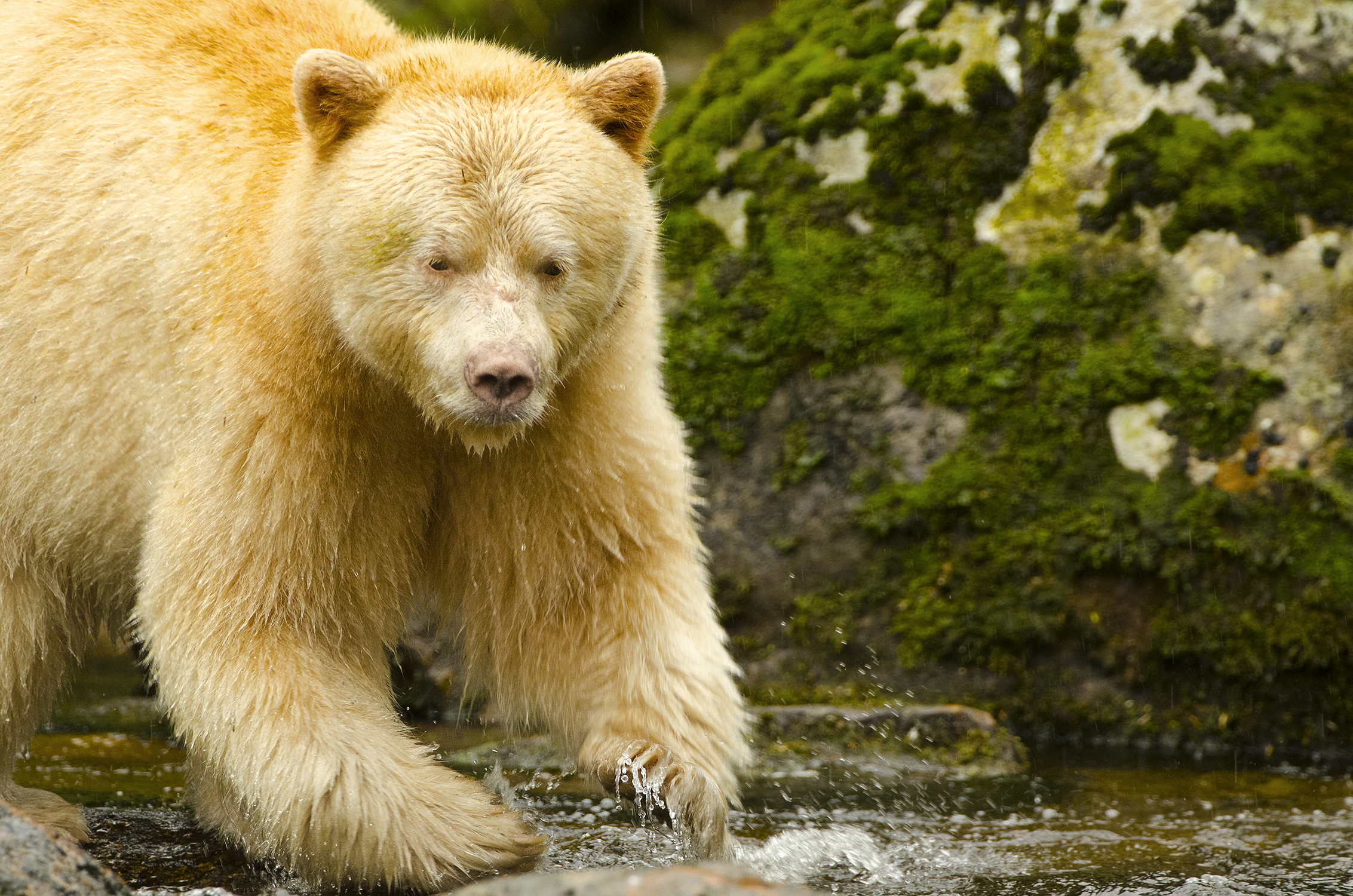
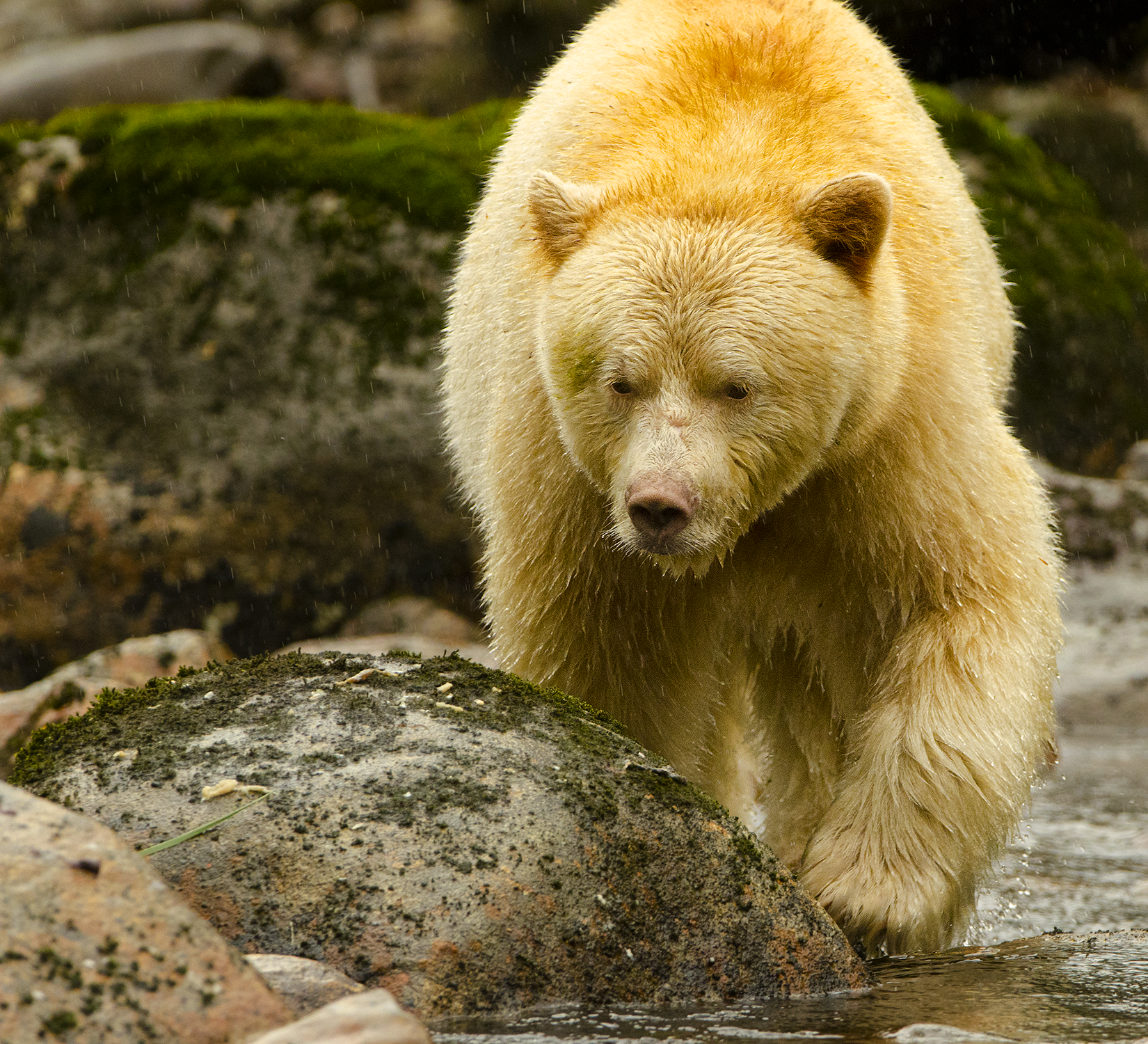
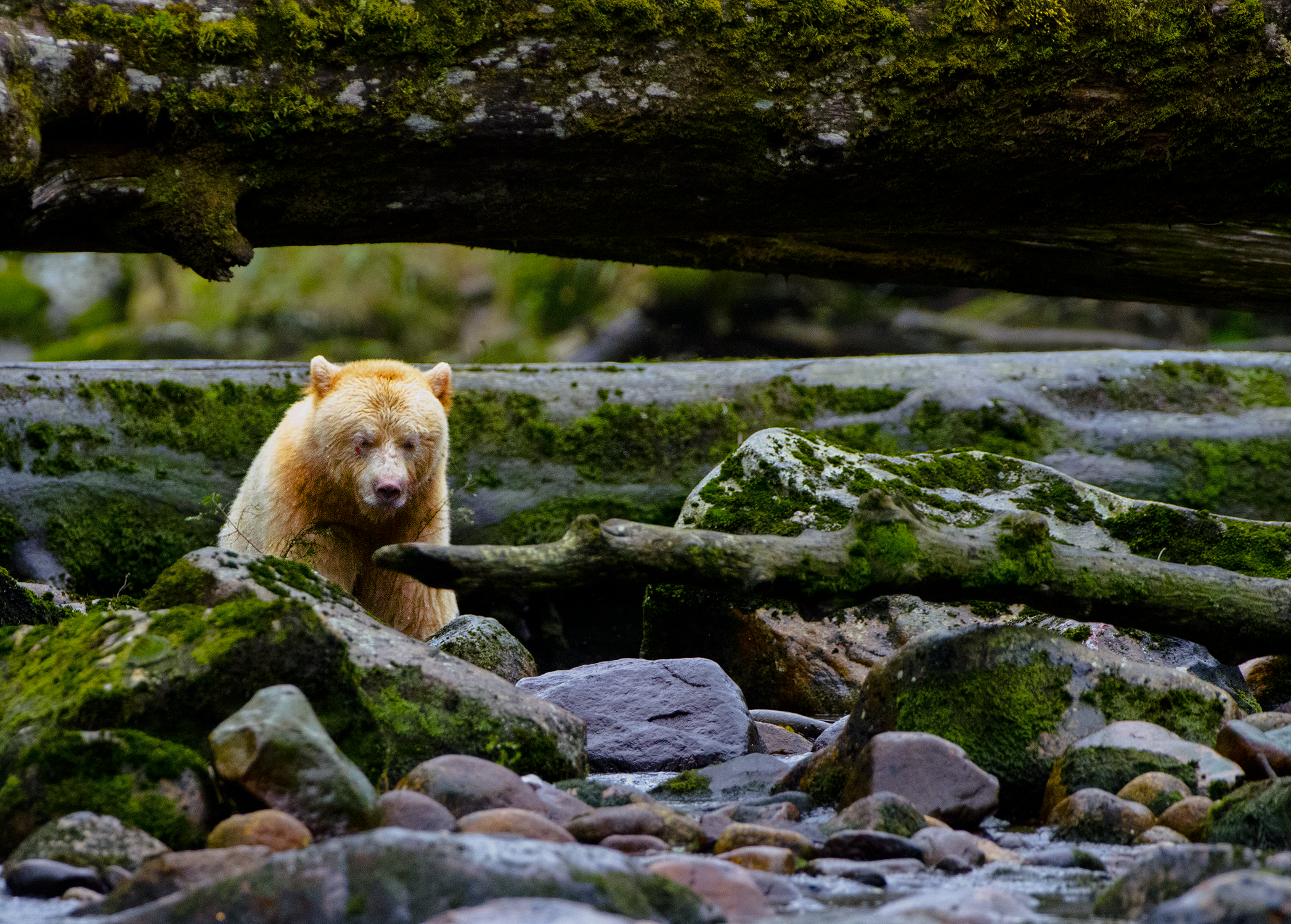
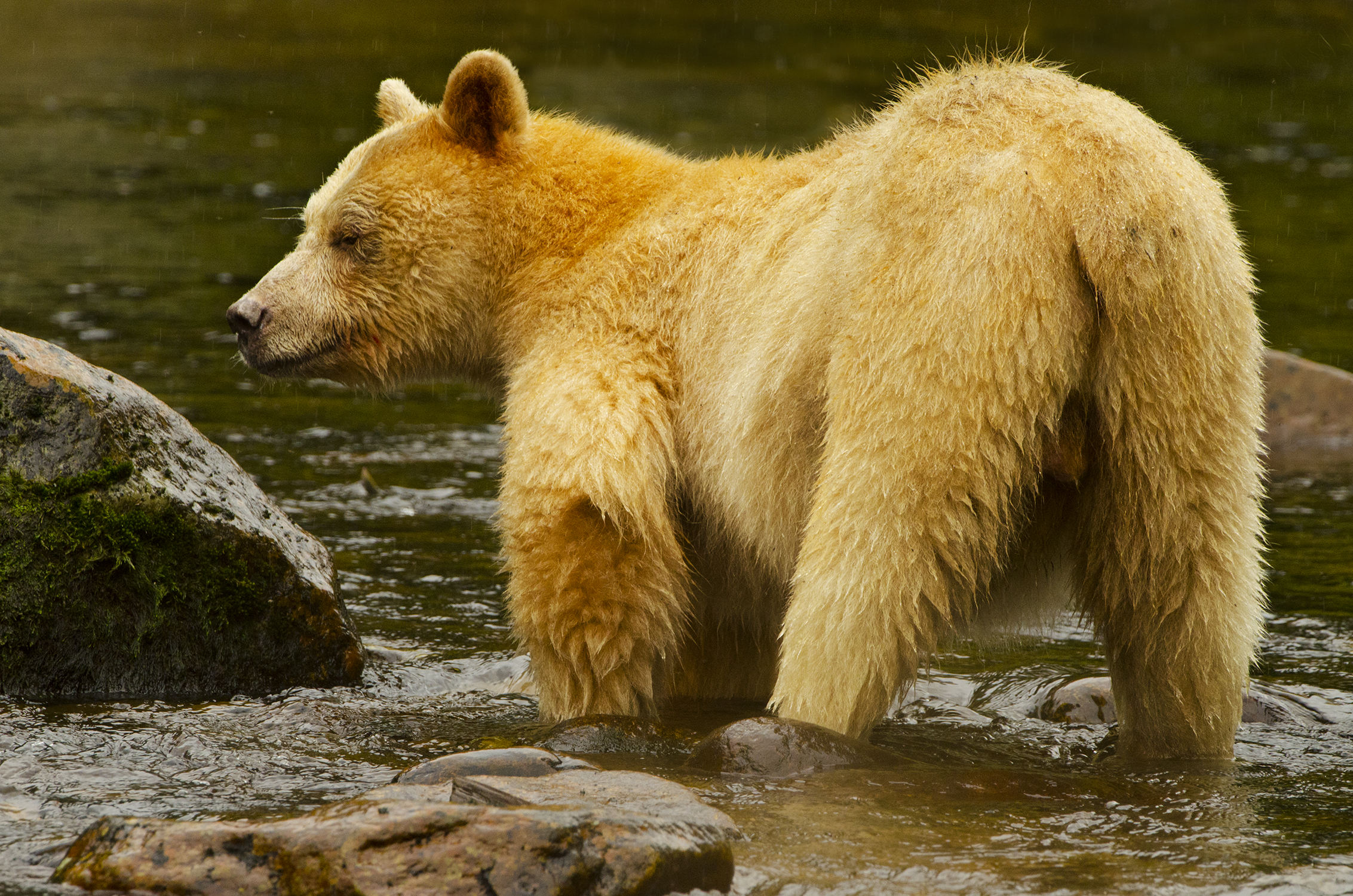
Just as National Geographic's cover story on the Spirit Bear appeared on news stands, I was heading west to start exploring the Great Bear Rainforest. The highlight was three rainy days on Princess Royal Island with the Spirit Bear (Ursus americanus kermodei), as well as the more common colour phase of the Black Bear (Ursus americanus). The gene for fur colour is either black or blonde (not albino). Only when the gene from both parents is blonde, will the cub have blonde fur. If the cub has 2 black fur genes, or 1 black and 1 blonde fur gene, it will always have black fur. As a result, only 1 in 4 black bears, on average, in the Great Bear Rainforest, will be a blonde colour. That is why the Spirit Bear is so rare.
Khutzeymateen Grizzly Bear Reserve
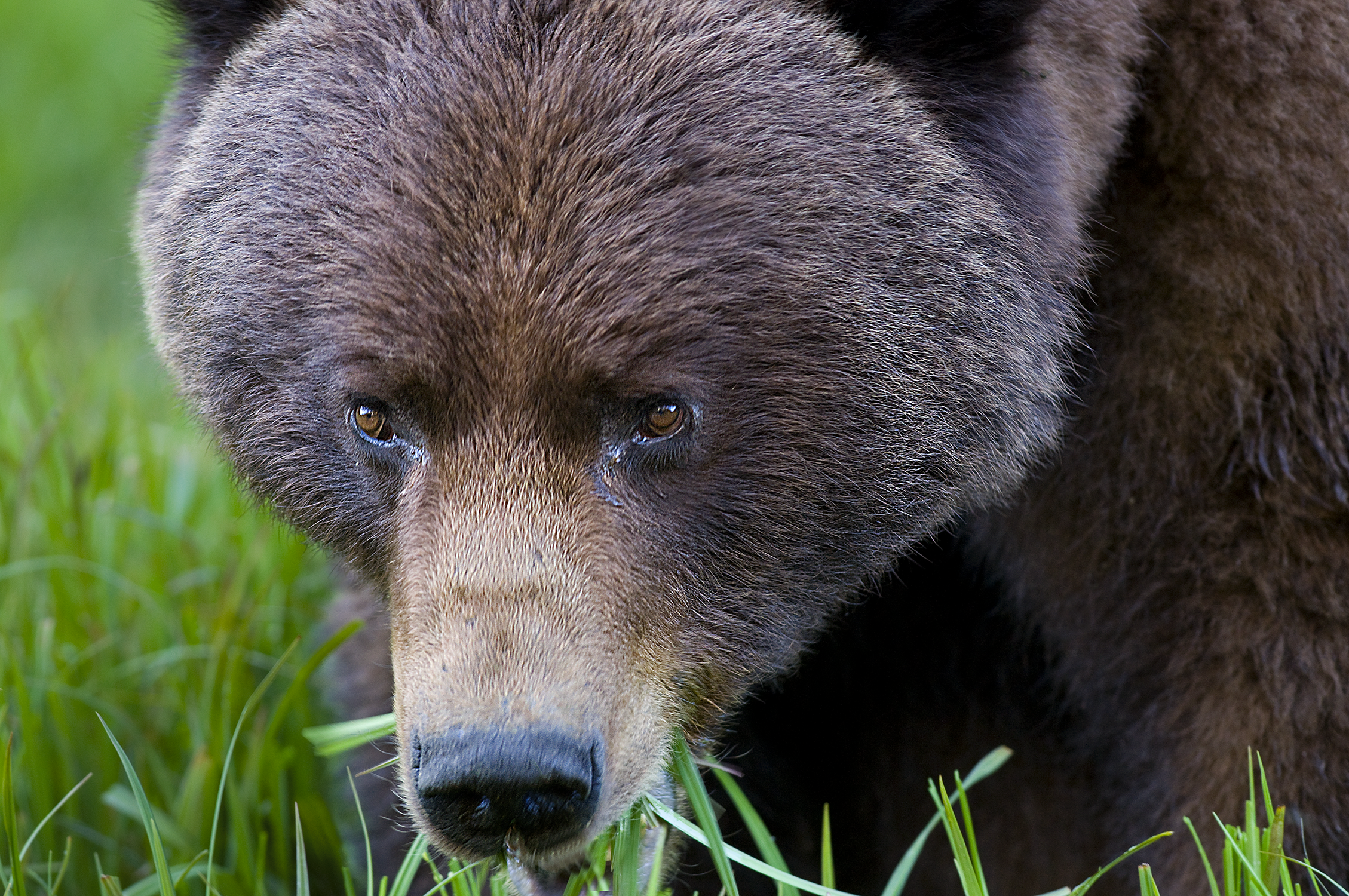
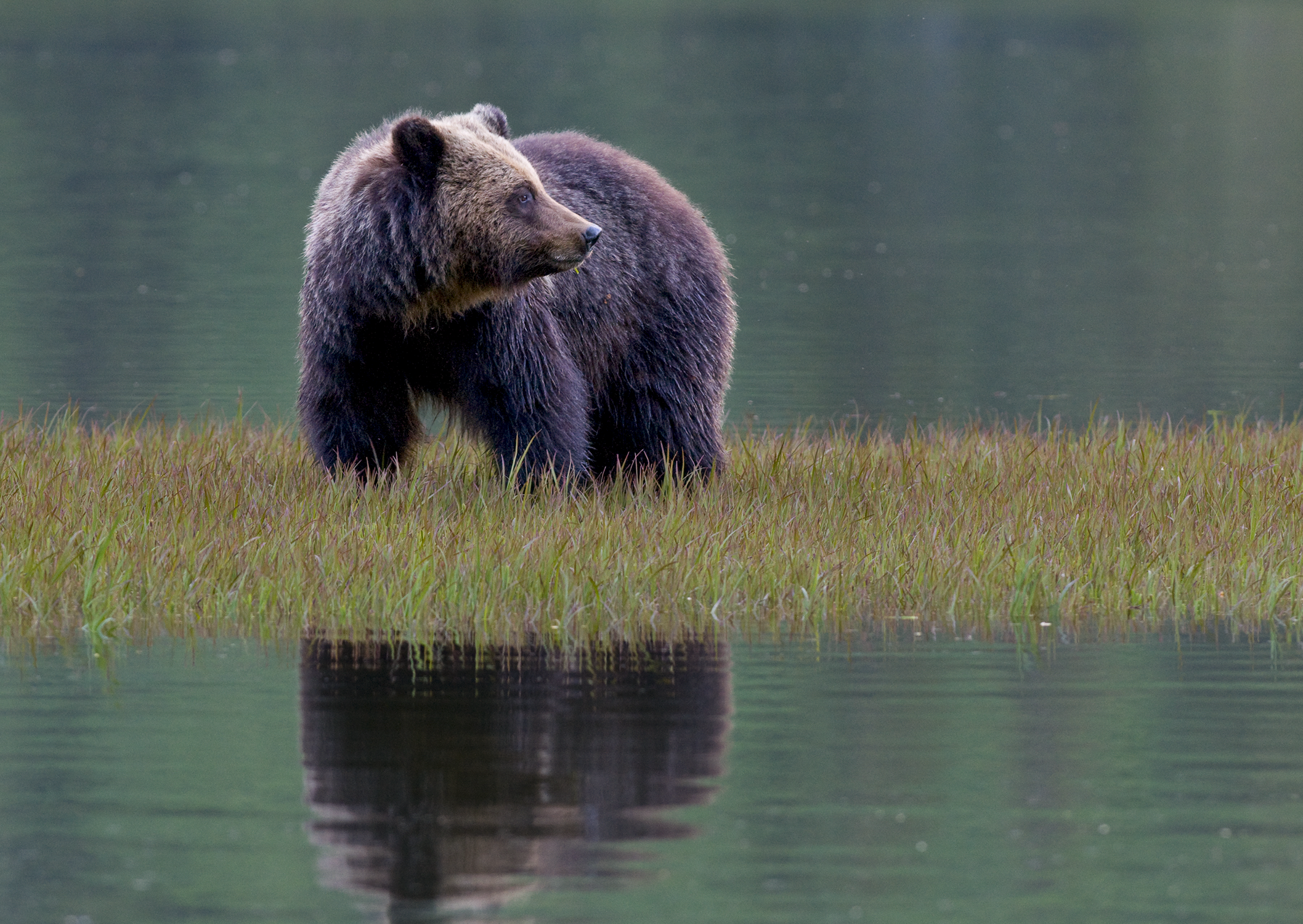
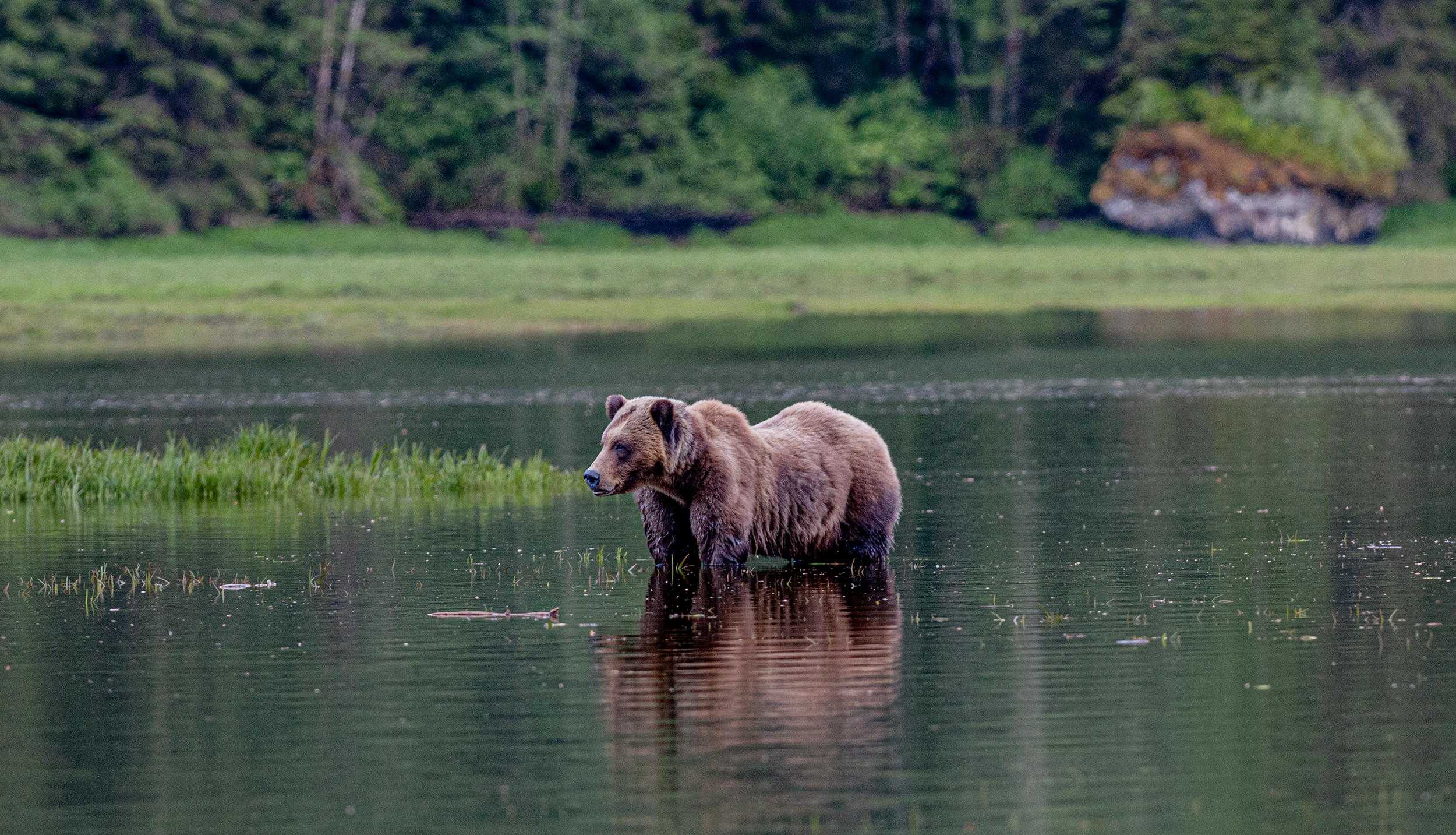
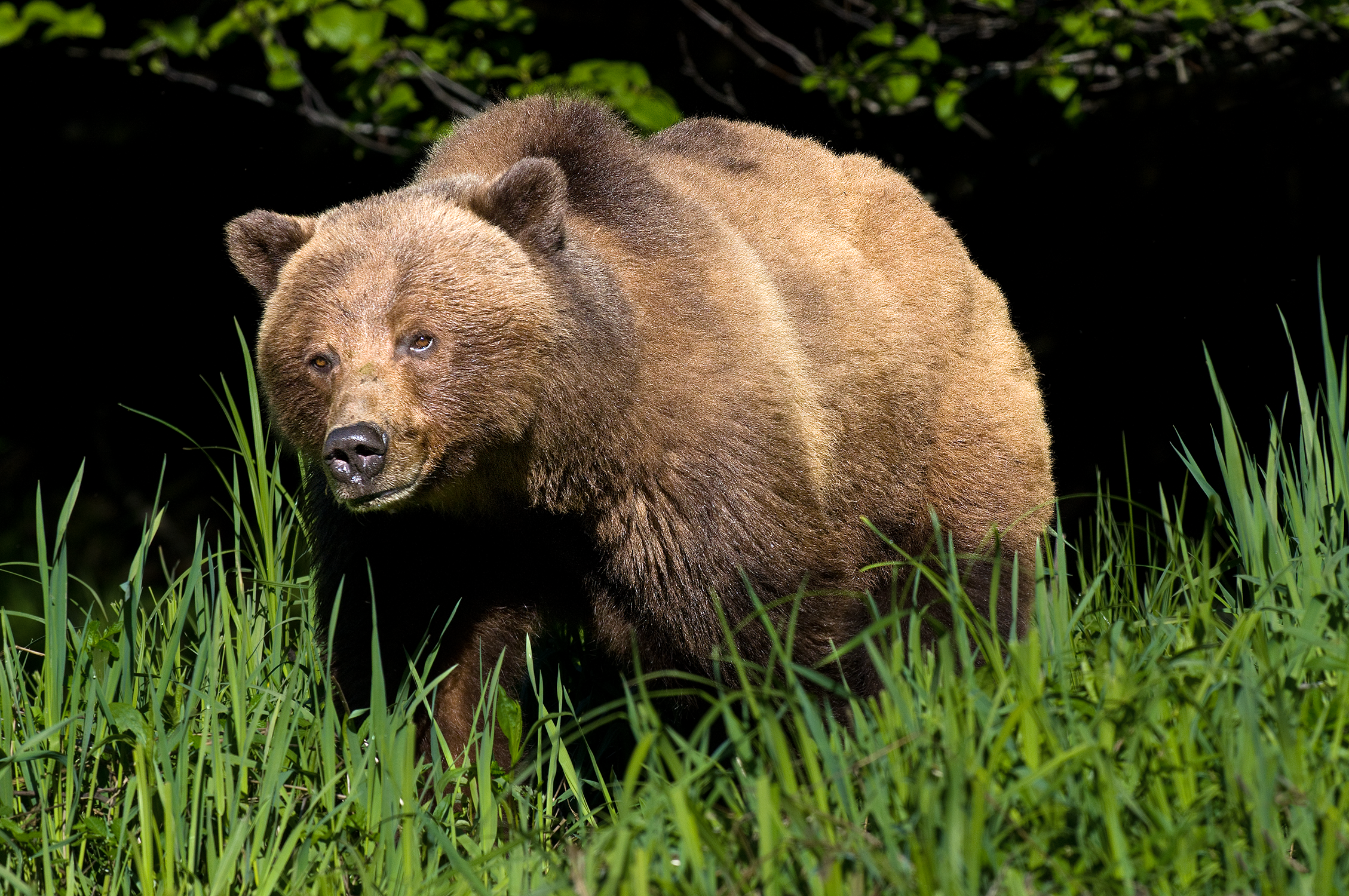
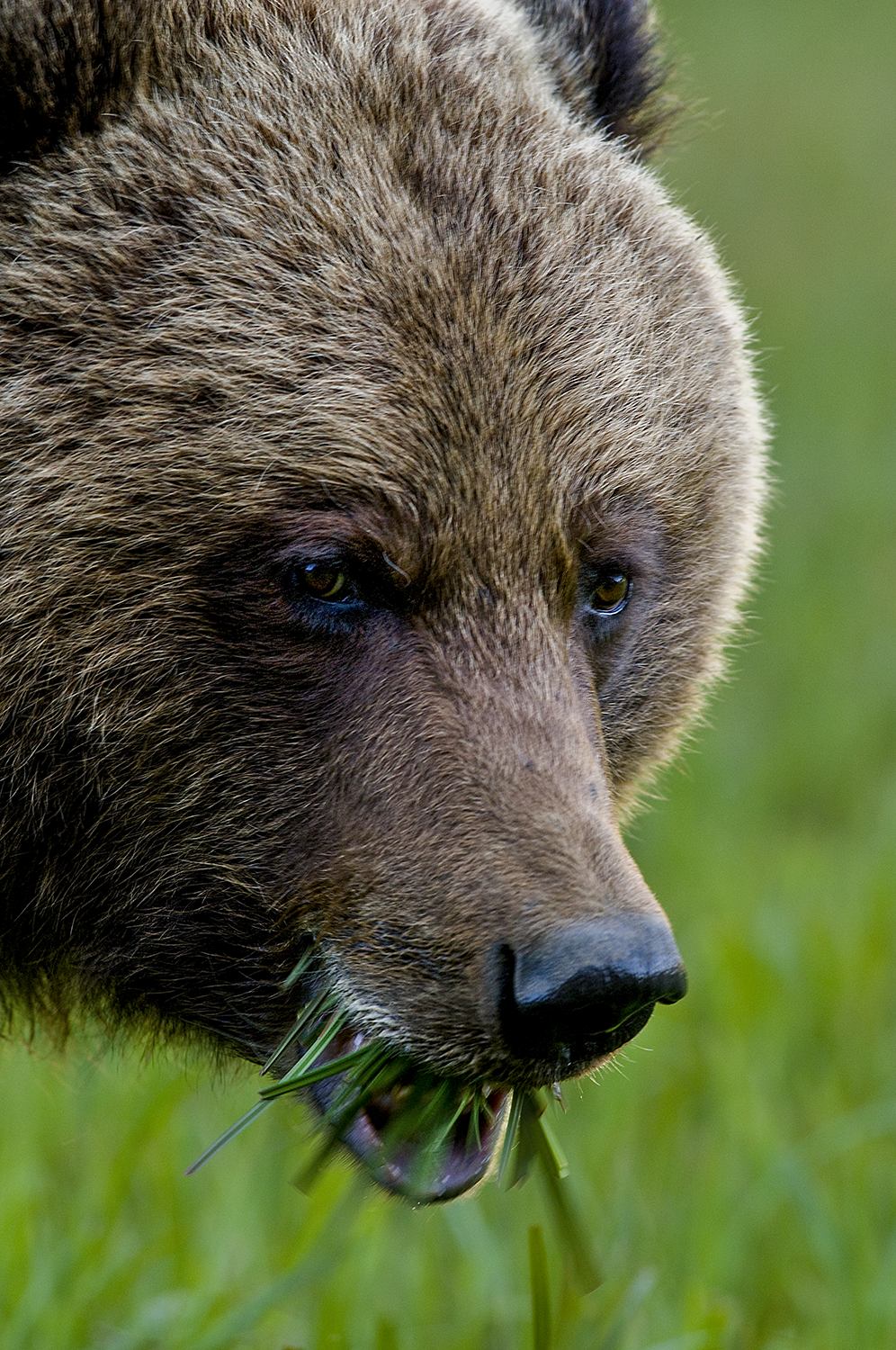
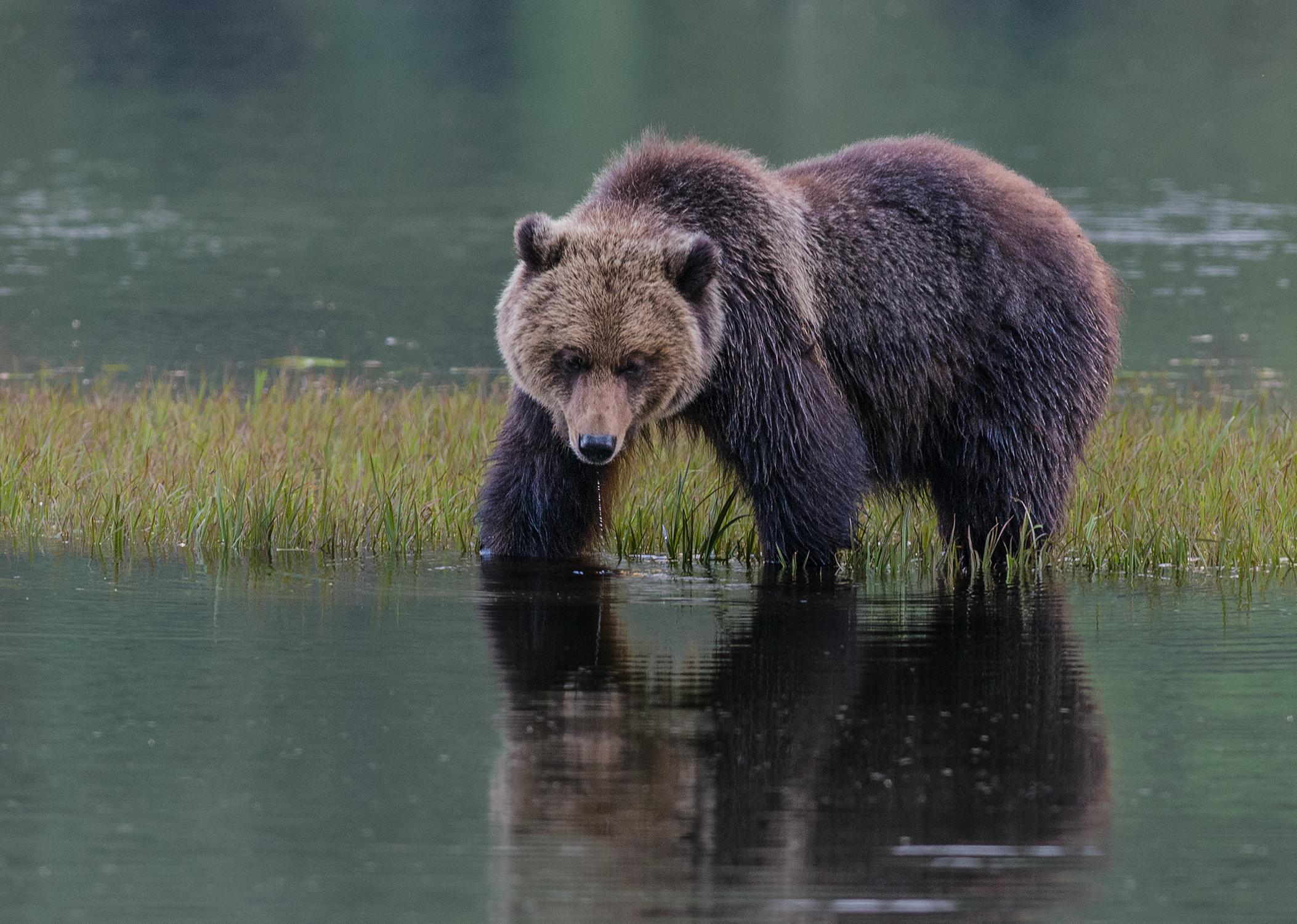
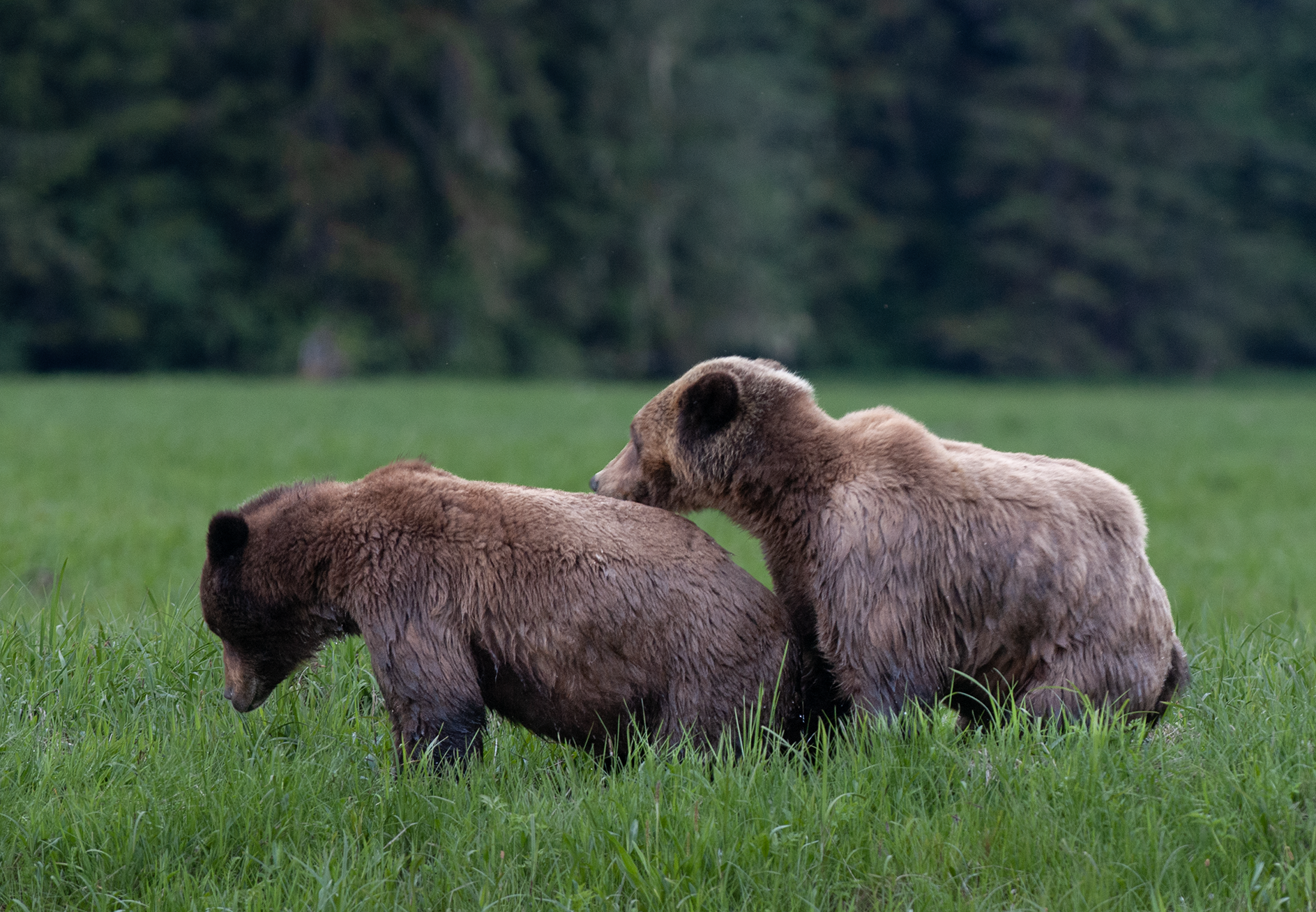
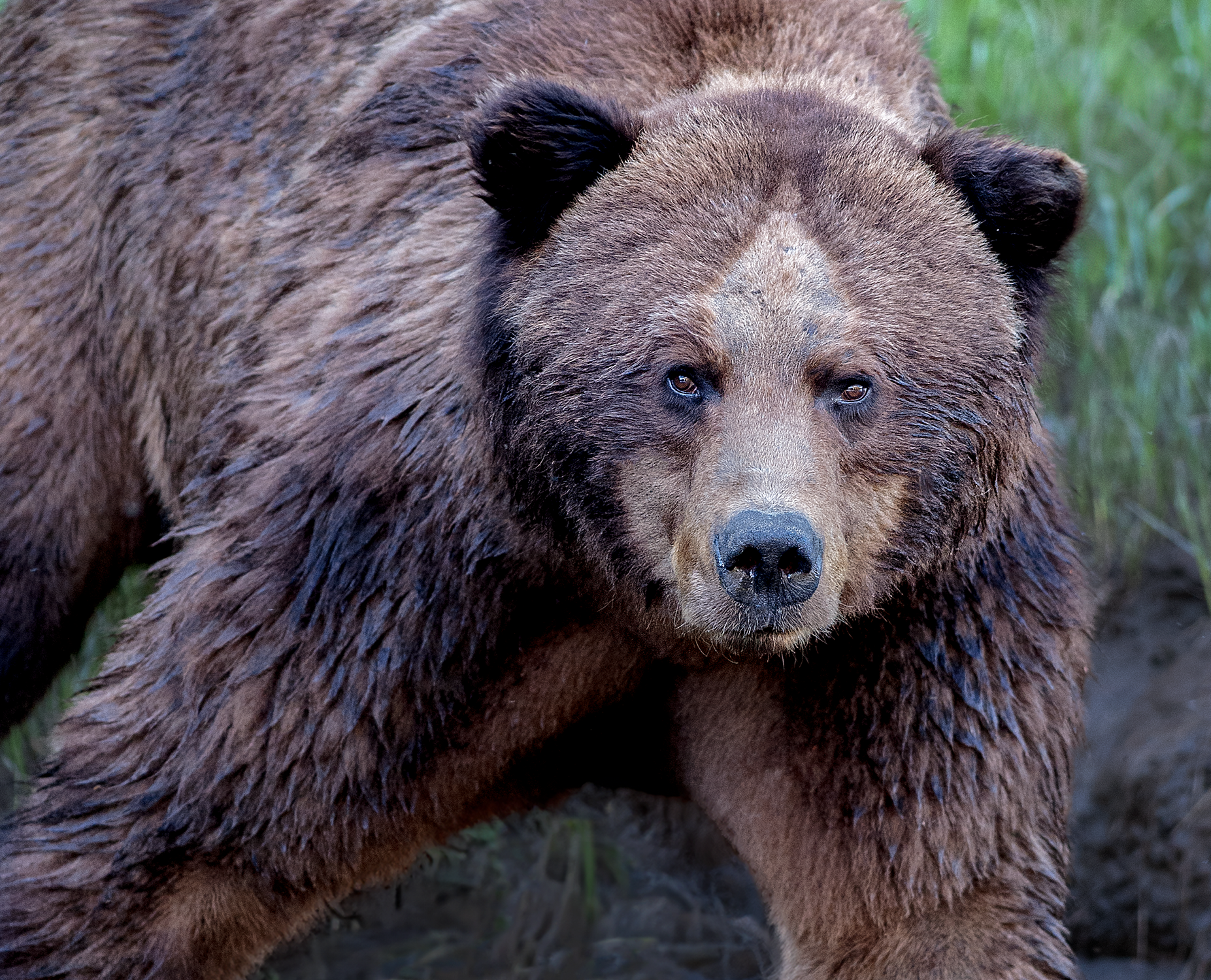
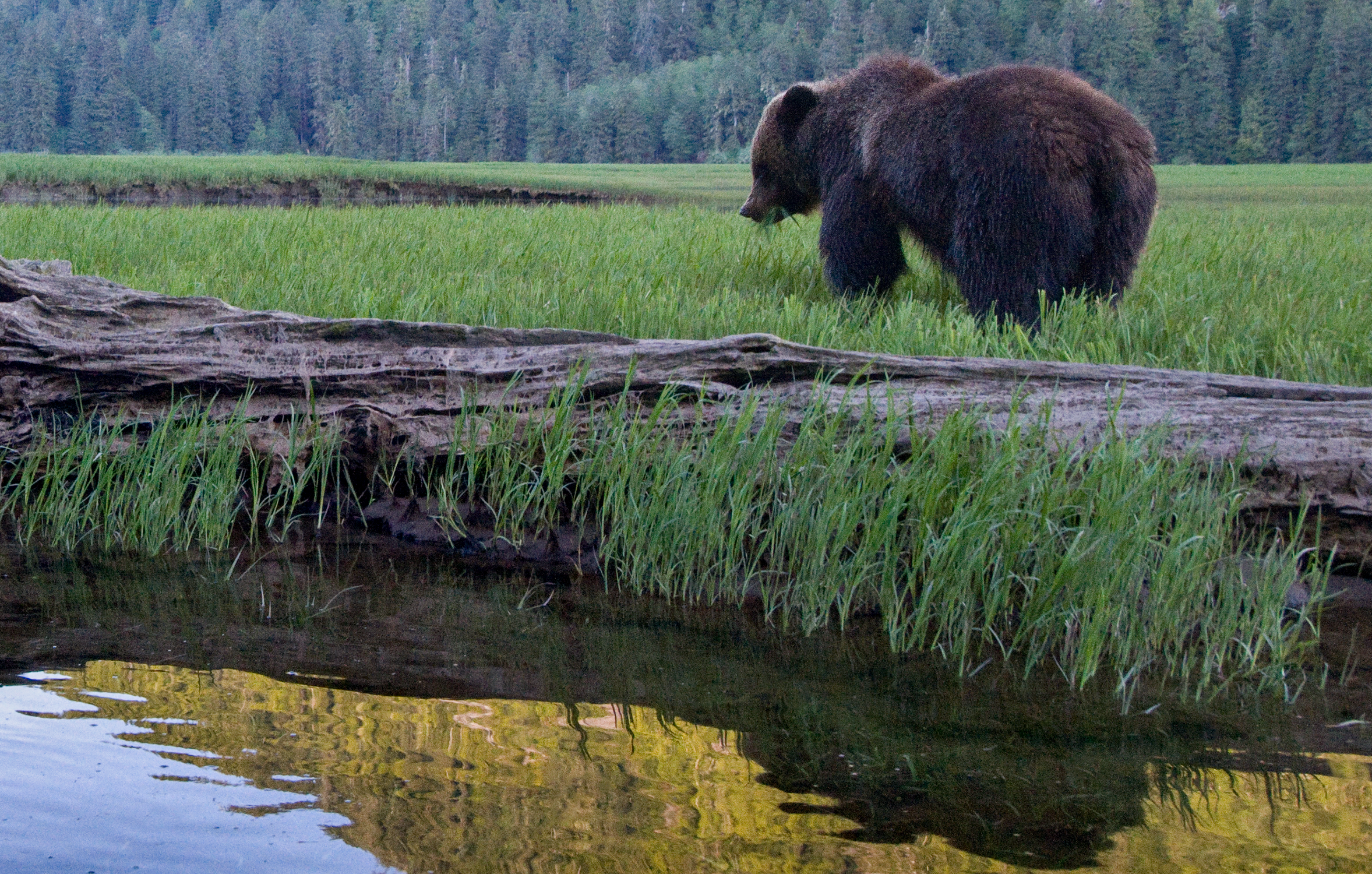
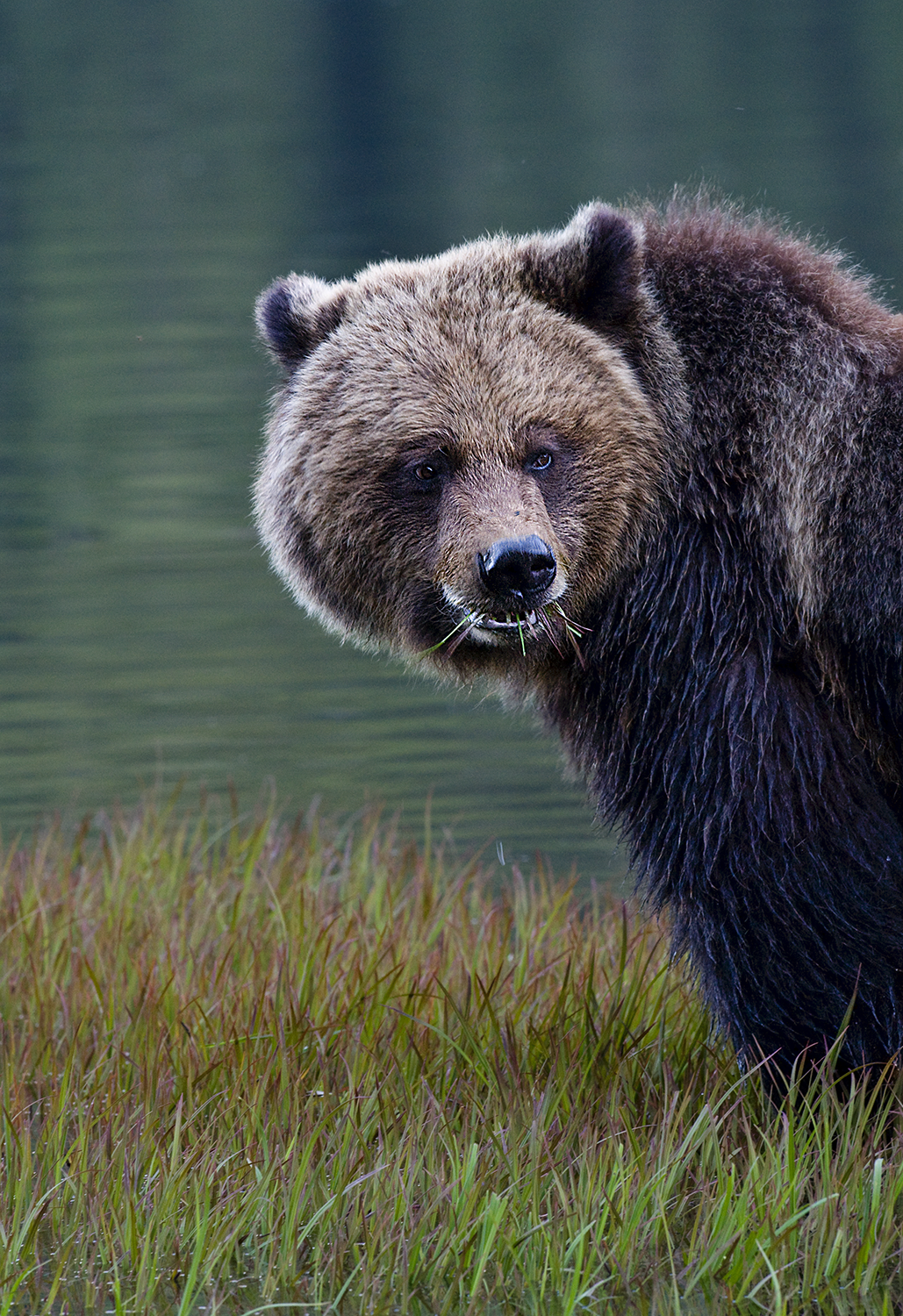
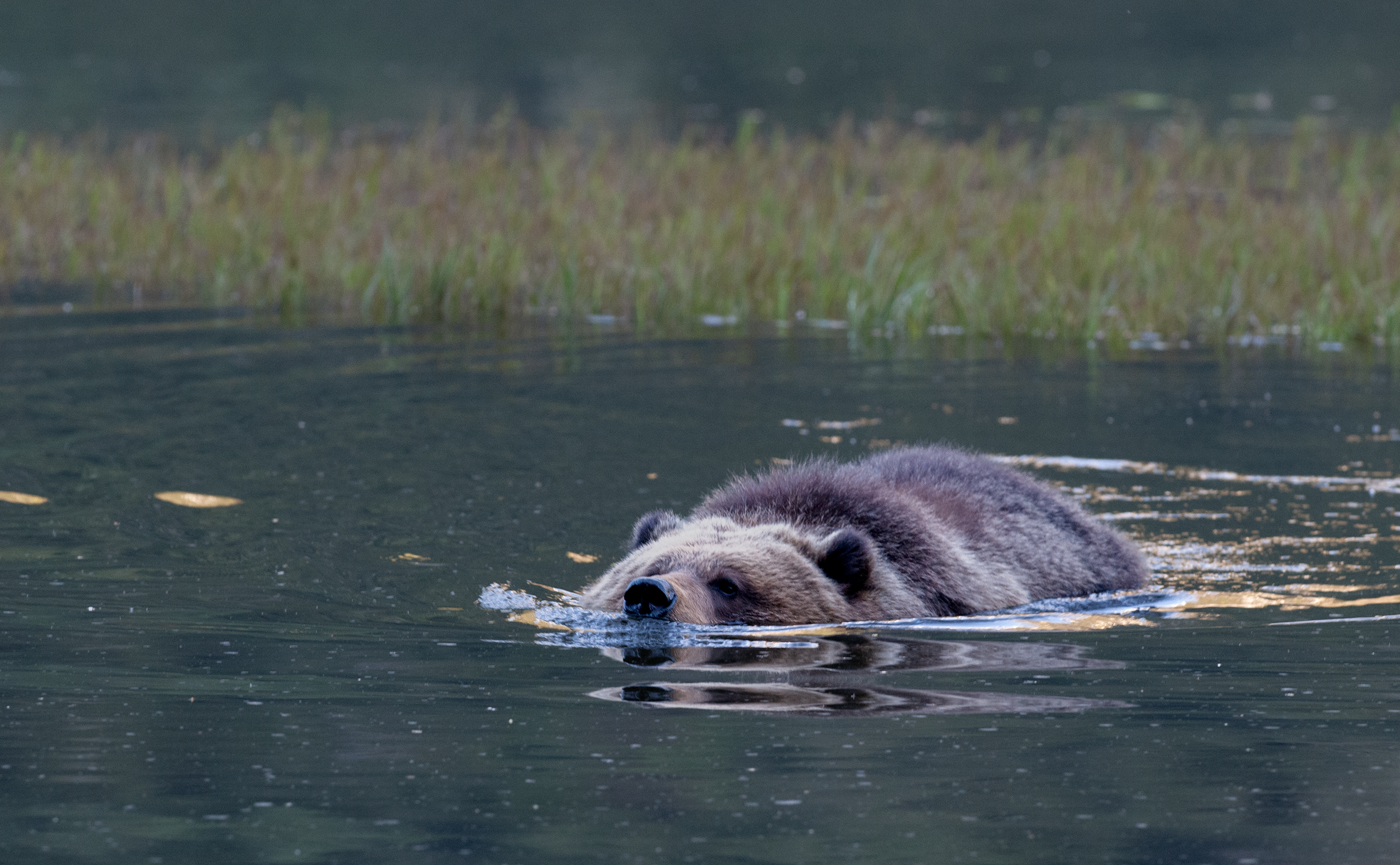
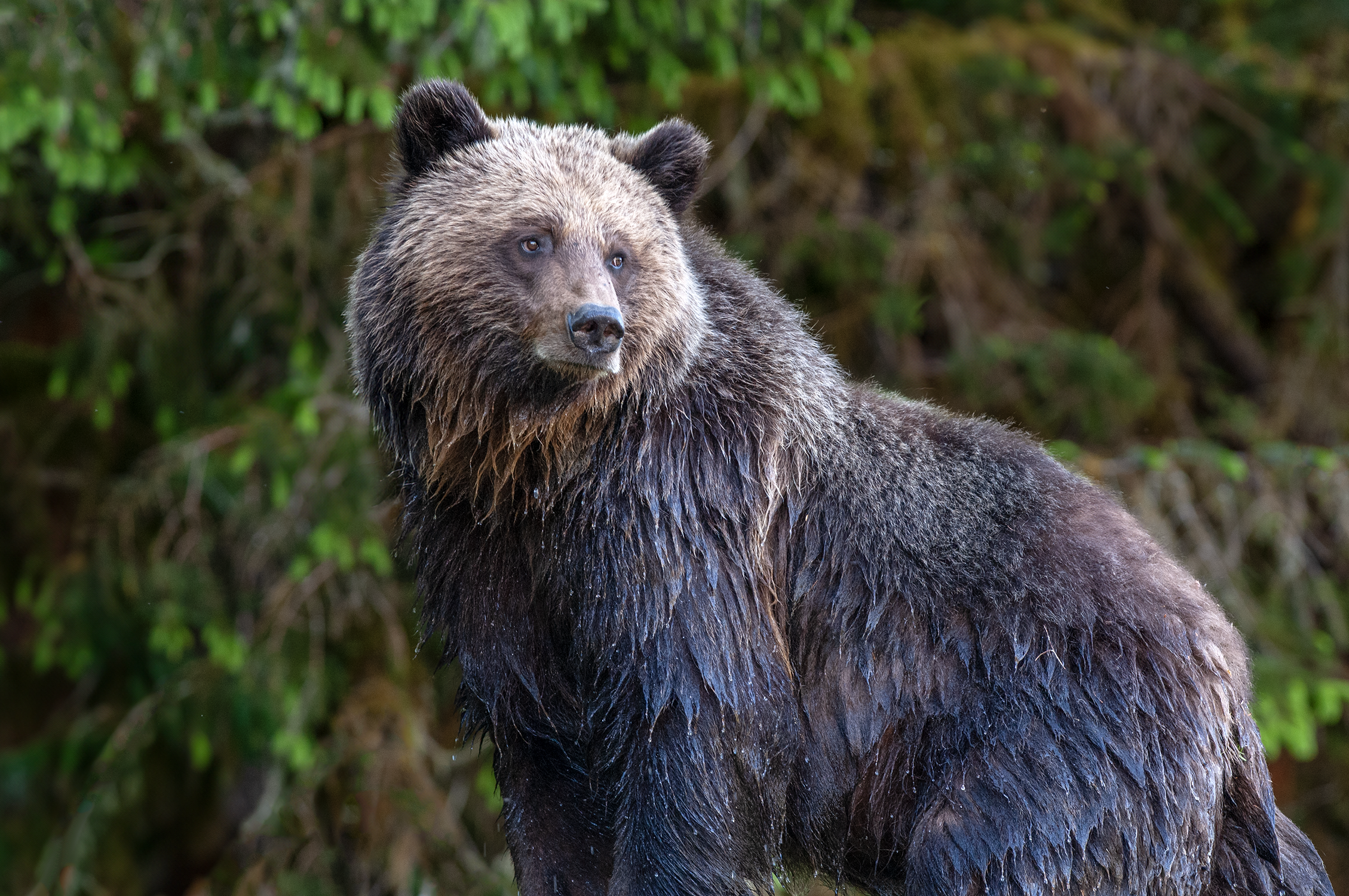
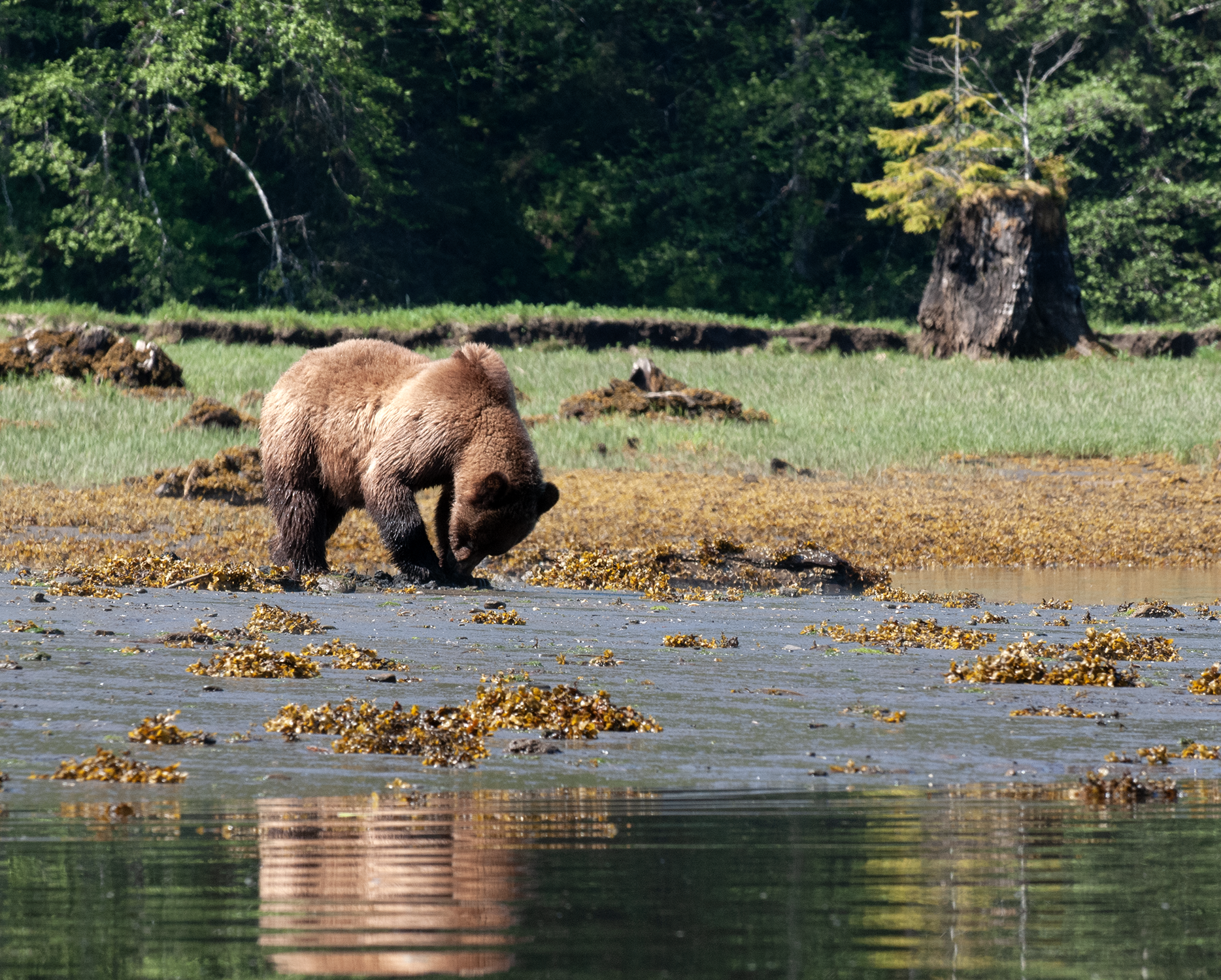
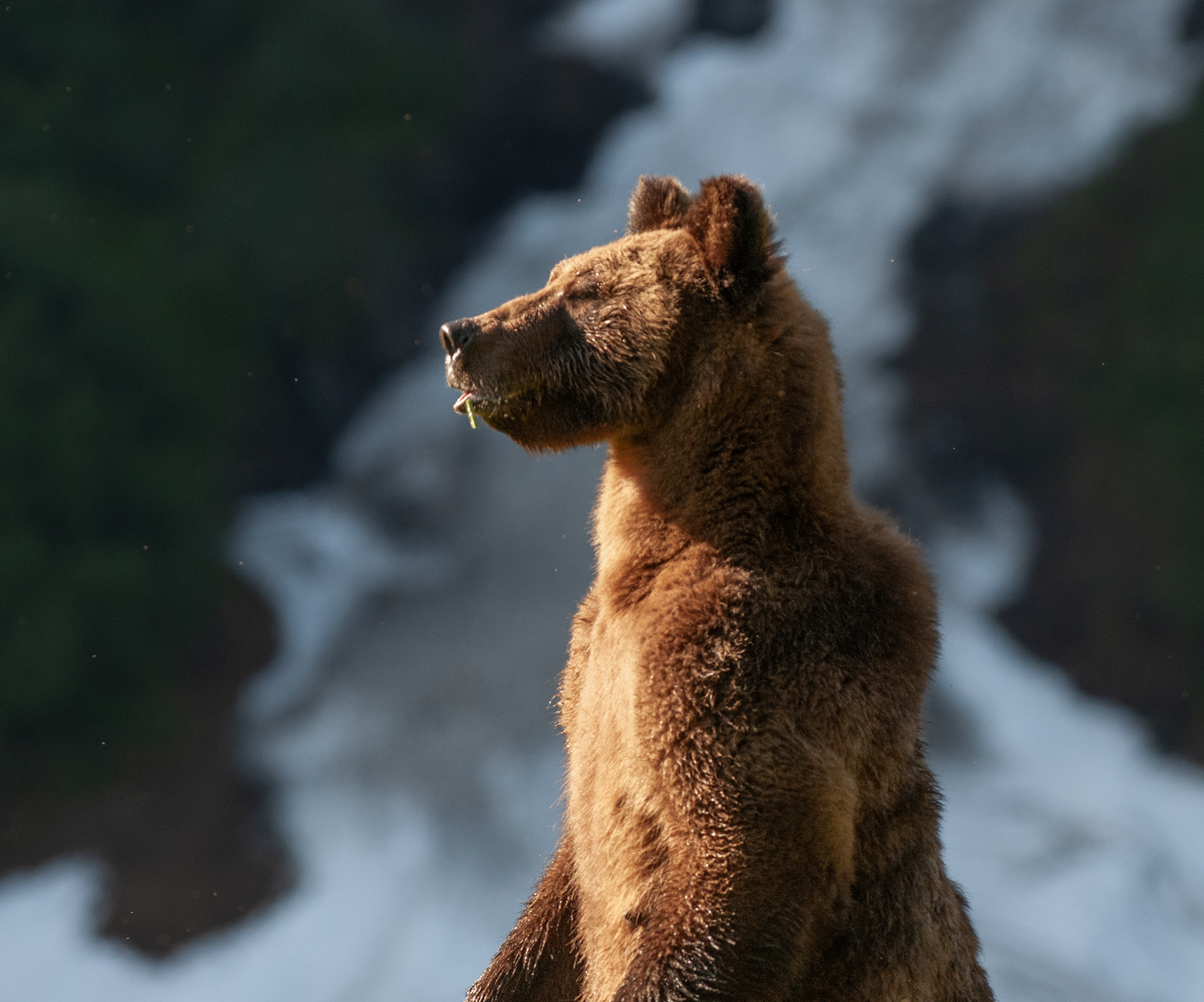
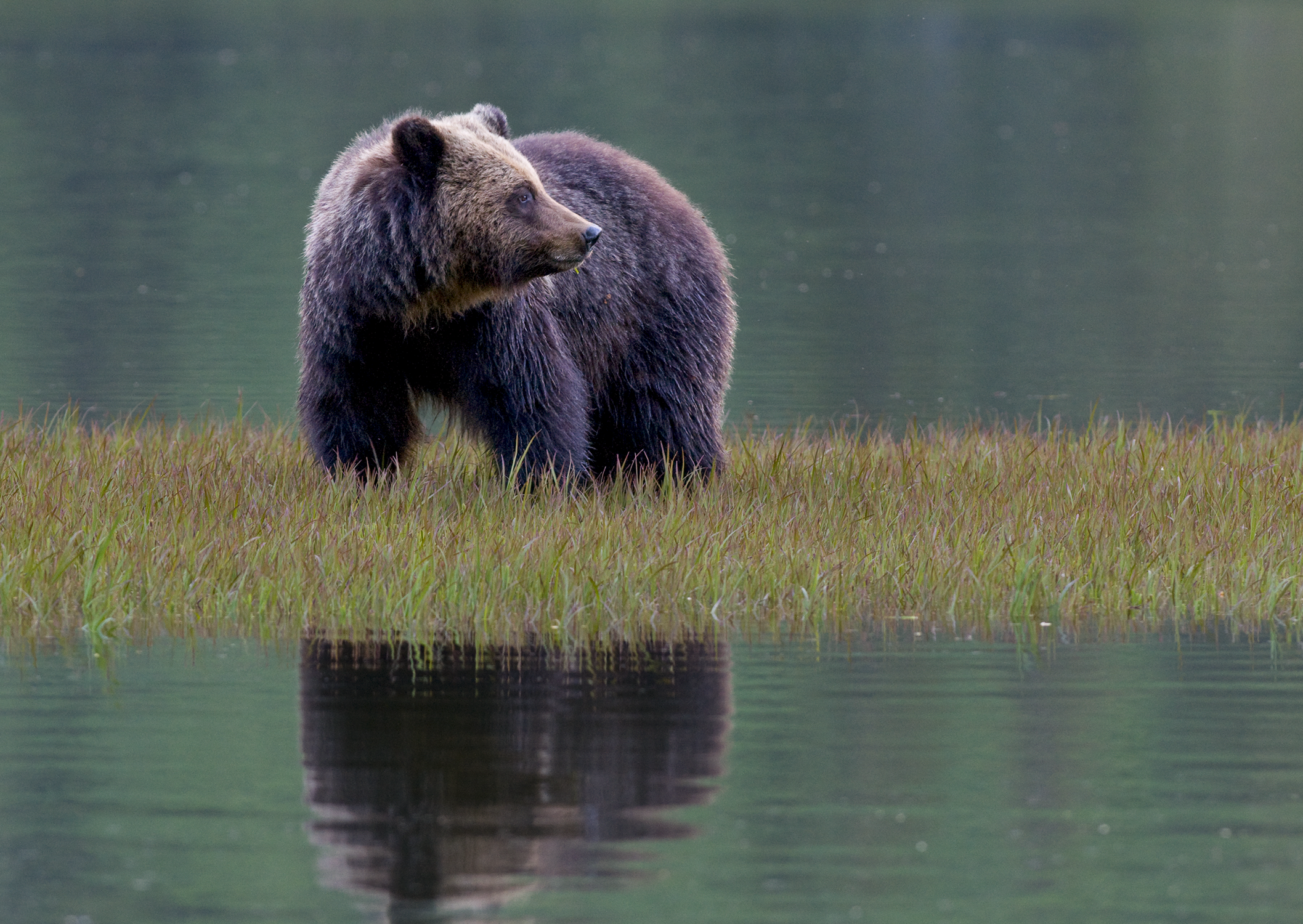
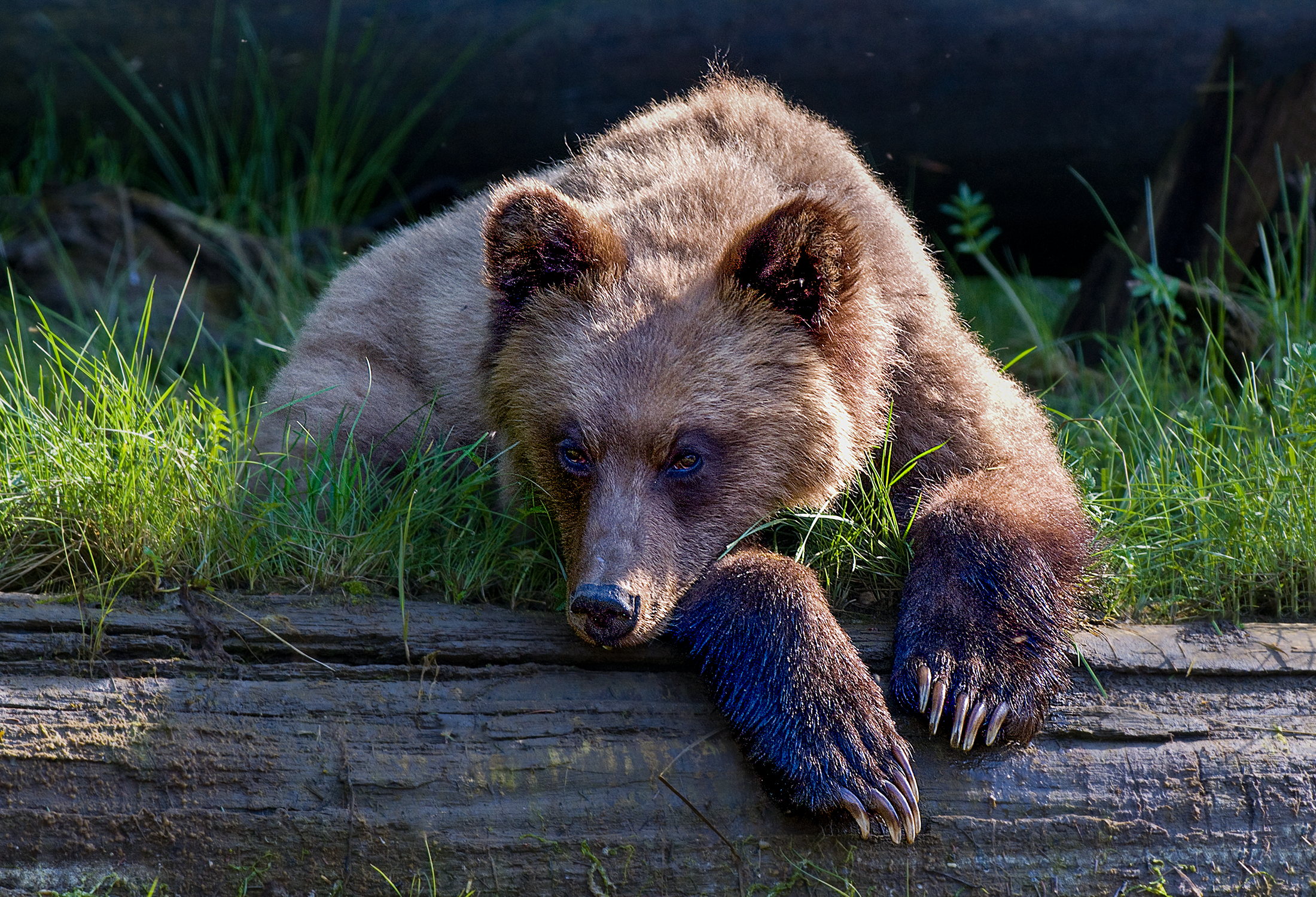
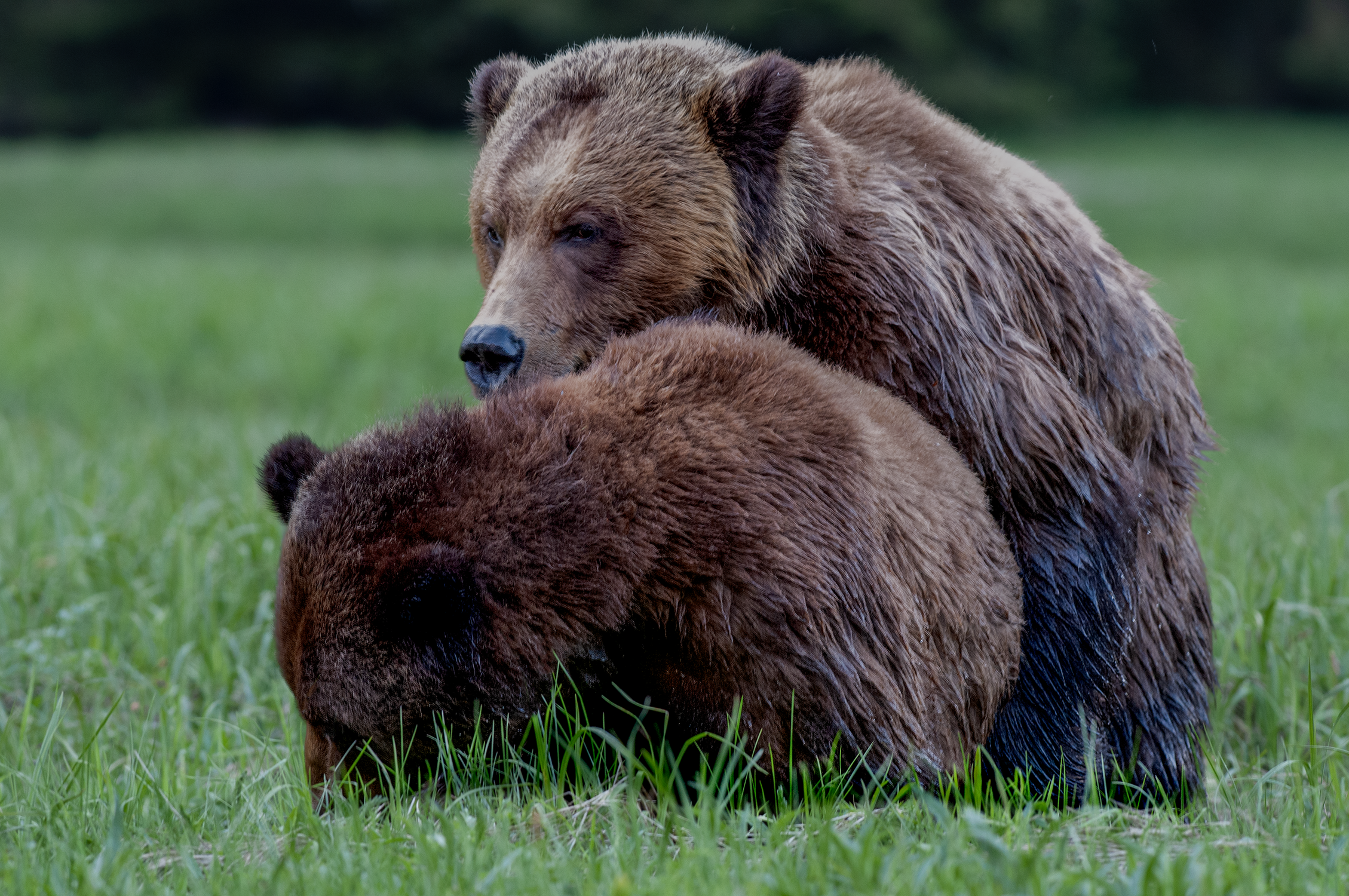
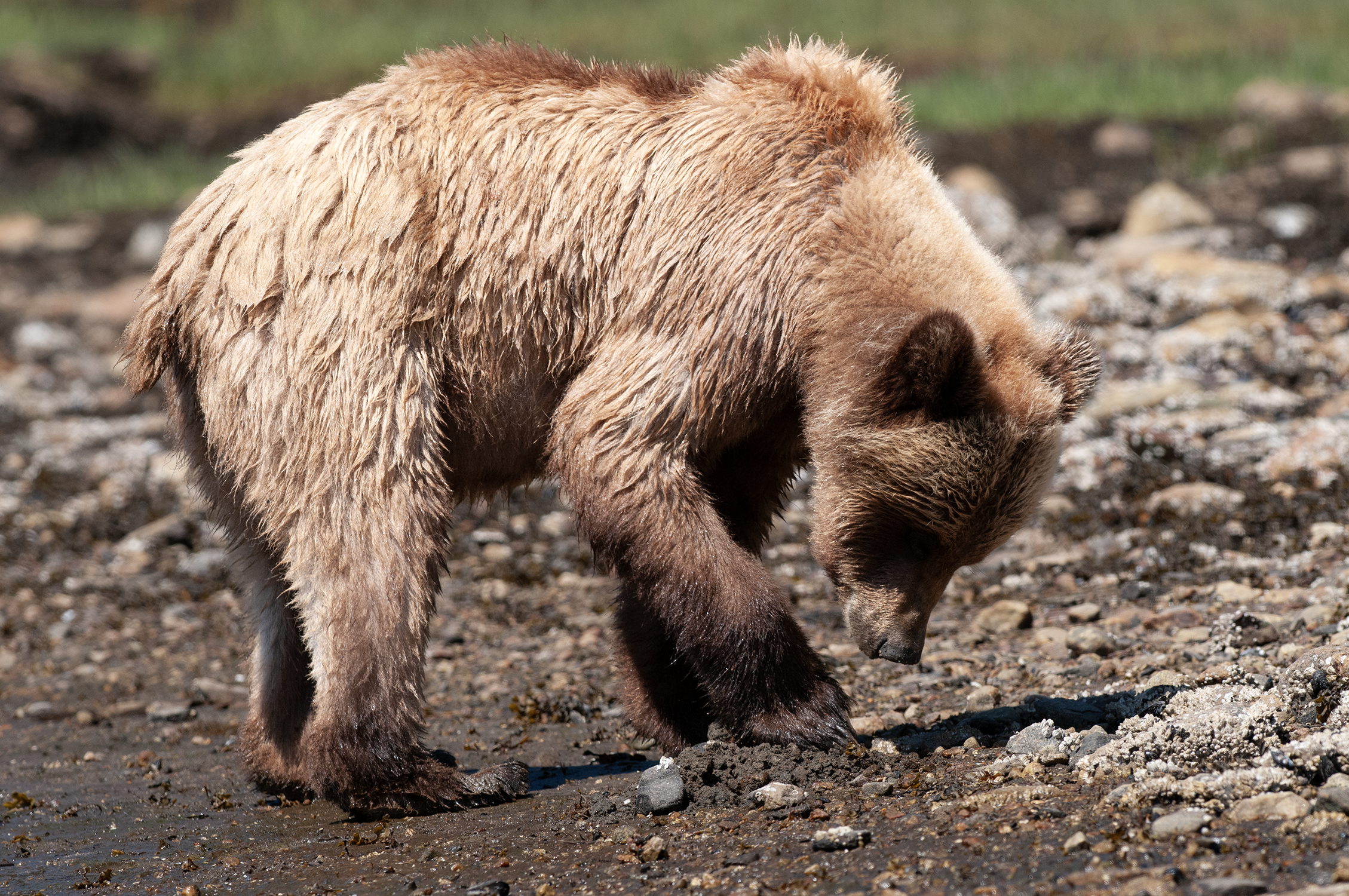
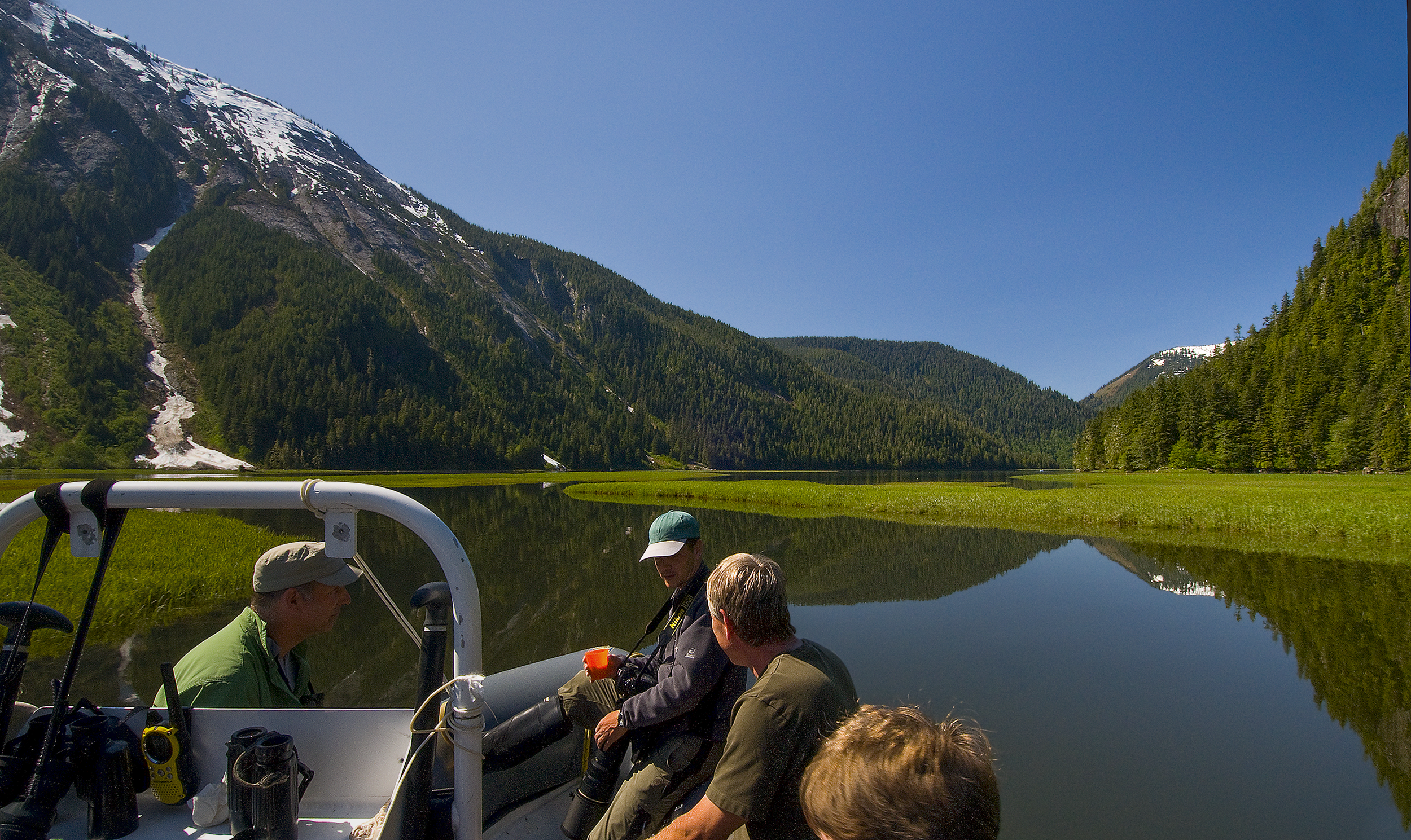
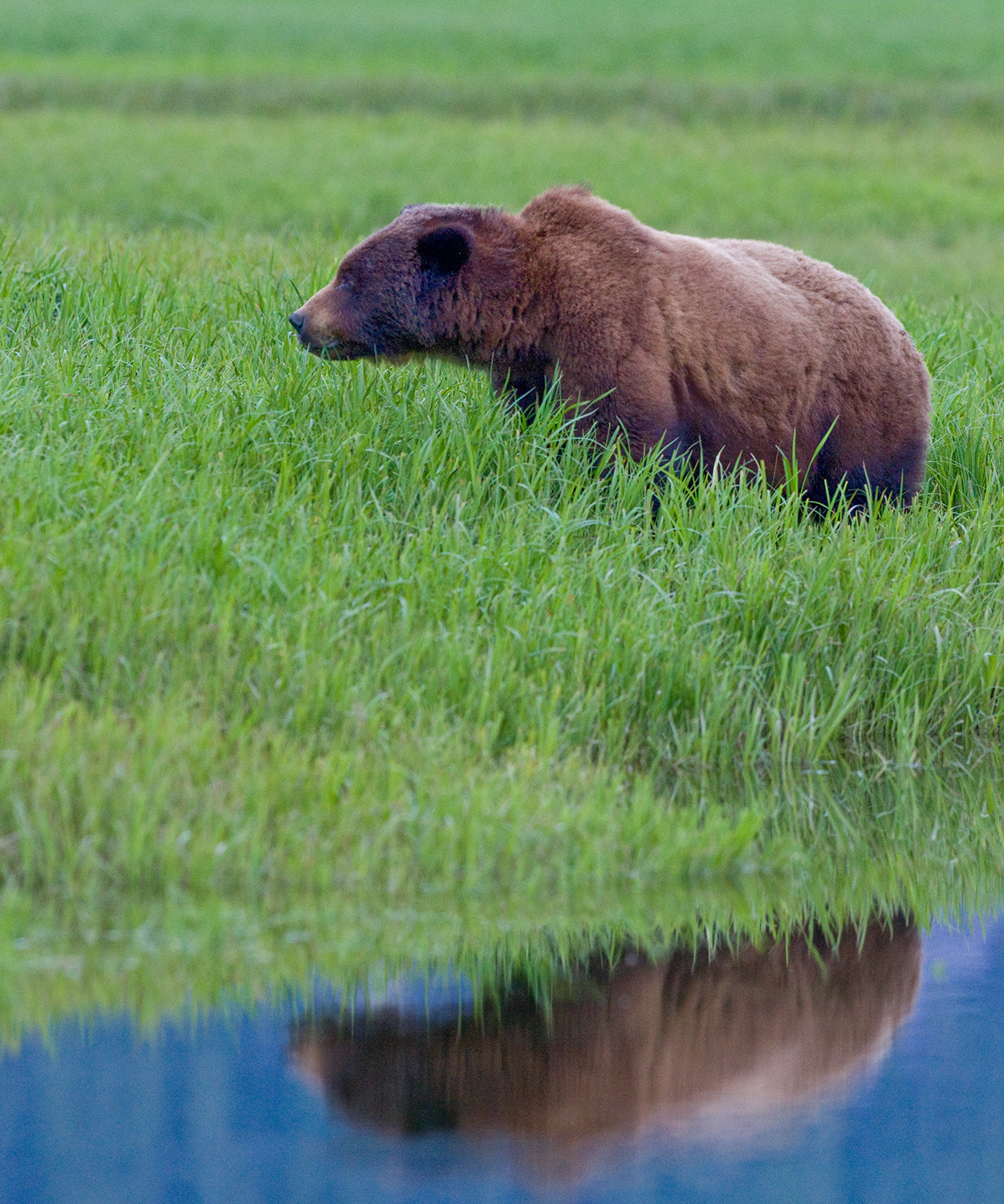
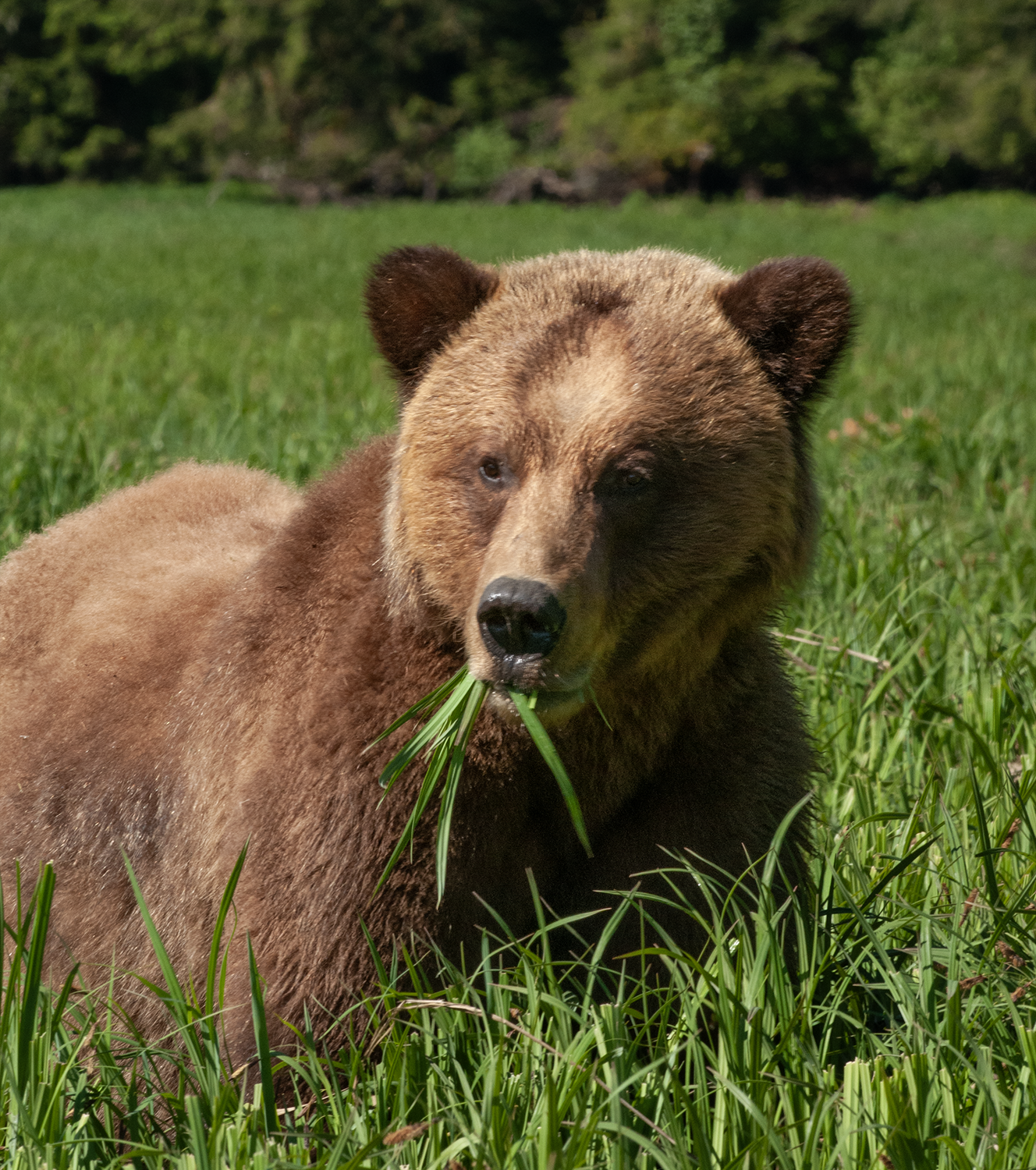
This pristine coastal estuary and the Khutzeymateen River watershed, are located just a short flight north of Prince Rupert, British Columbia. The name Khutzeymateen comes from the Tsimshian First Nation's language, meaning 'place of the salmon and bears'. The Reserve is home to approximately 50 grizzlies, some weighing up to 400 kgms. I was lucky enough to spend 4 days in May 2009 discovering many interesting habits of these large powerful animals. Having just come out of hibernation, and being true omnivores, the bears spent hours every day eating mostly sedge grasses! Until salmon runs later in the year, the bears' diet is 75% sedge grass (25% protein content), with intertidal life (clams & crabs) making up the other 25%. The large hump between the shoulders is not a fat reserve. The hump is actually large powerful shoulder muscles that are needed to dig into the mud at low tide or flip over 30 kgm rocks, looking for more to eat..